
How do you build a house in Khao Kho, Phetchabun?
Building a house in Khao Kho, Phetchabun starts with checking the land title, road access, slope, utilities and local permit rules. Khao Kho is cooler, wetter and hillier than most of Thailand. A successful build depends on drainage, transport logistics, weather-ready detailing and a realistic budget for remote-site work.
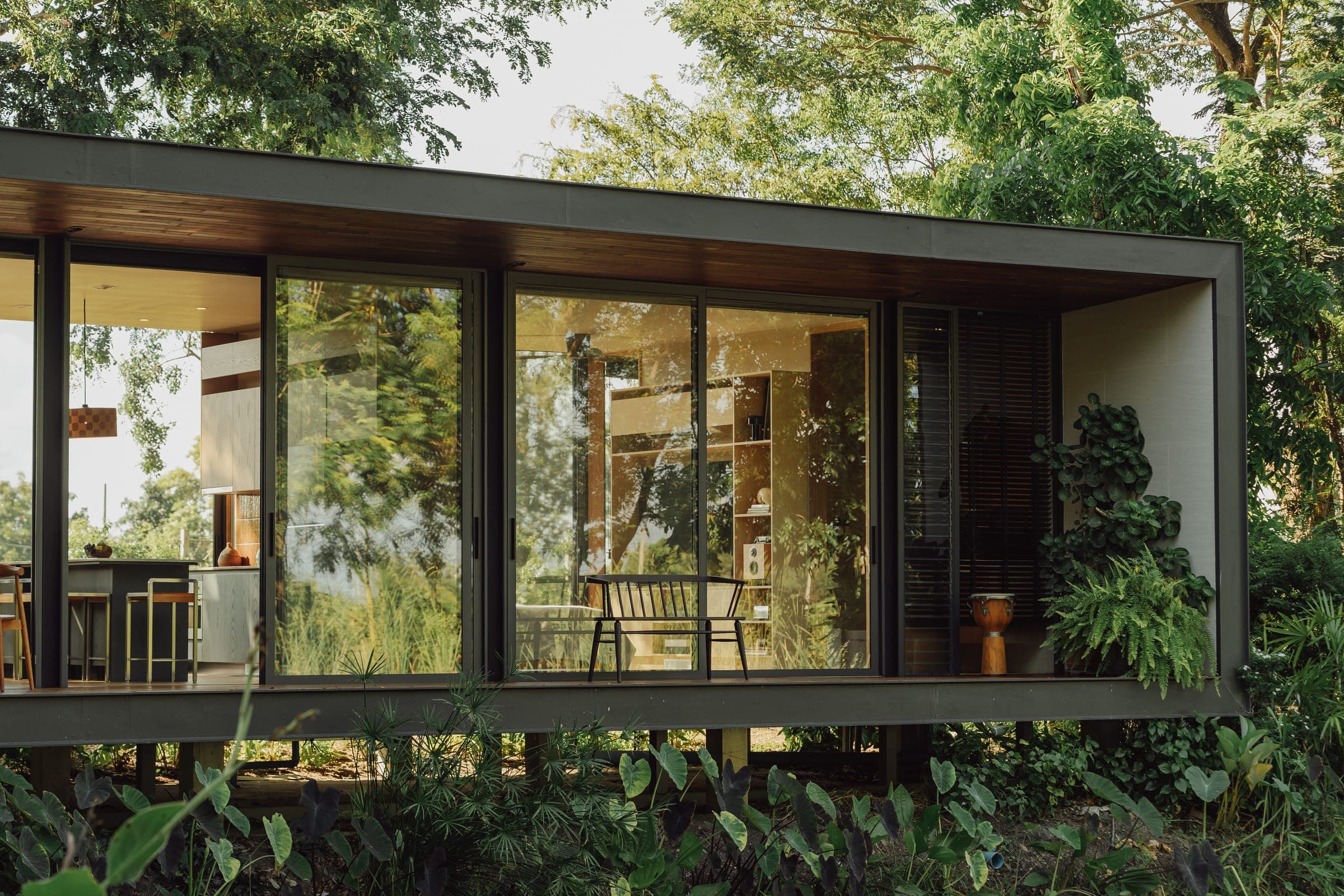
Building a house in Khao Kho, Phetchabun is possible, but the process is more site-sensitive than building on flat urban land. Before choosing a plan, confirm the title deed, legal access, district permit pathway, utility distance, and slope stability. Khao Kho's elevation, rainfall, and winding road network can affect foundation choice, delivery timing, labor logistics, and maintenance costs over the life of the home.
Has INK built a home in Khao Kho?
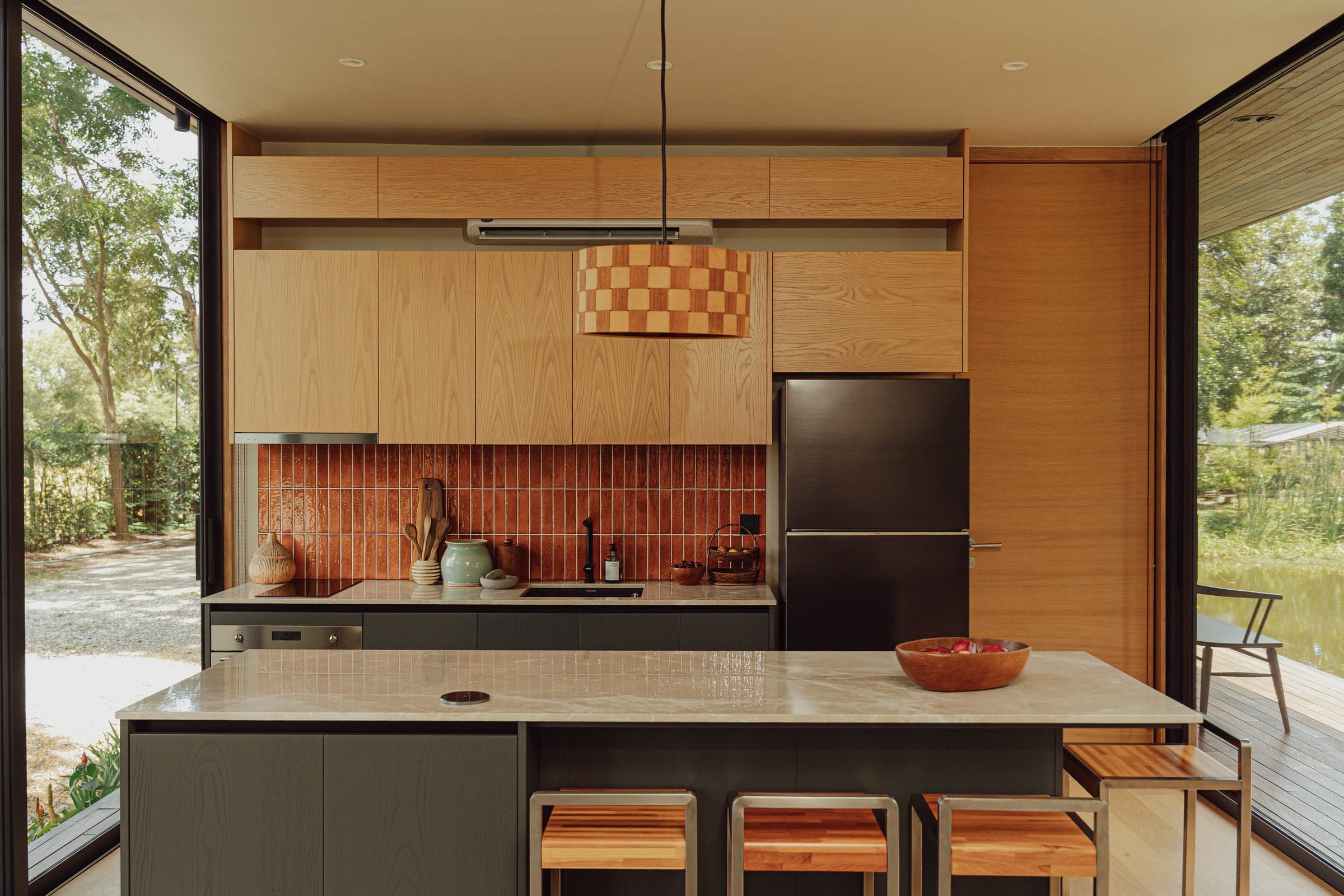
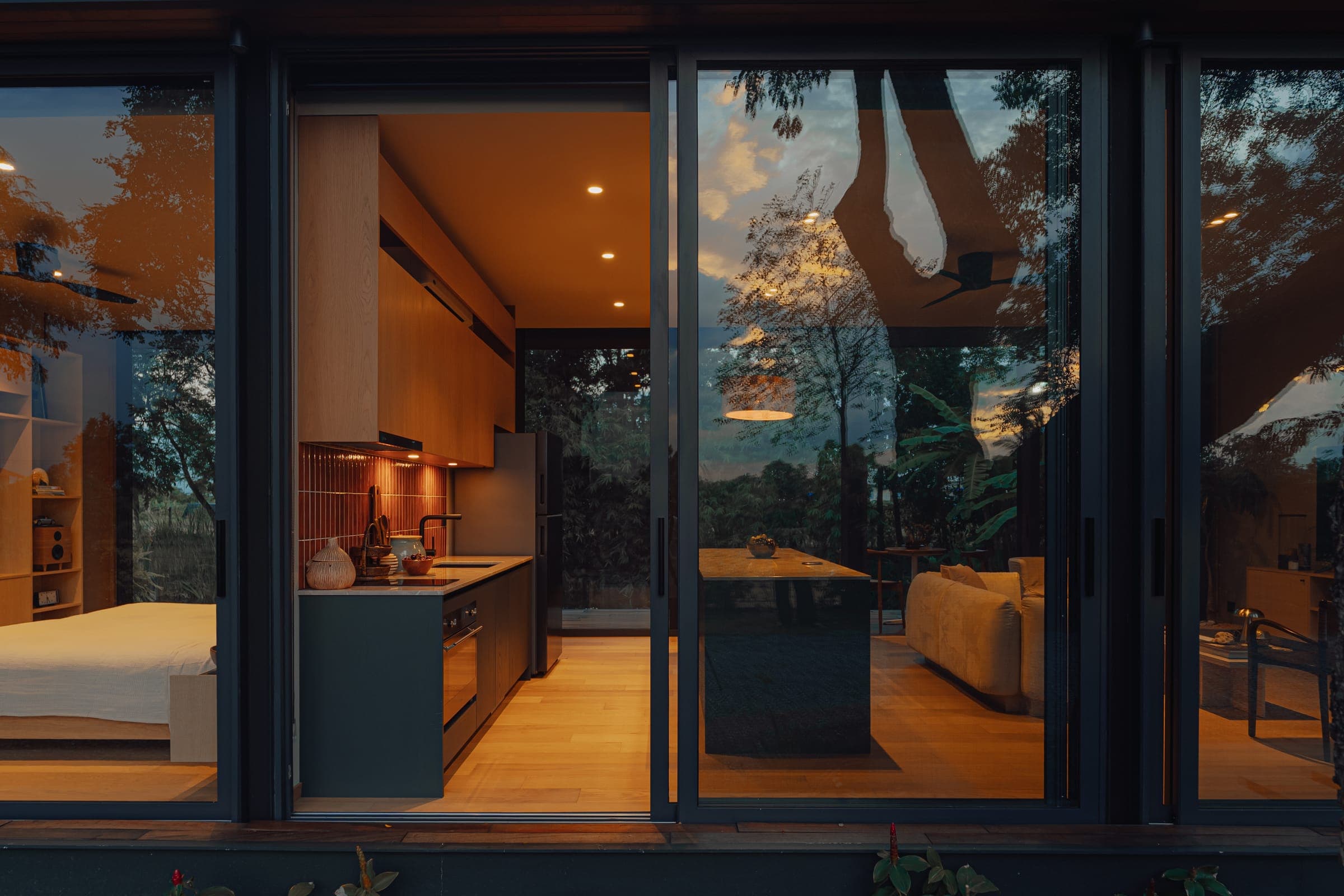
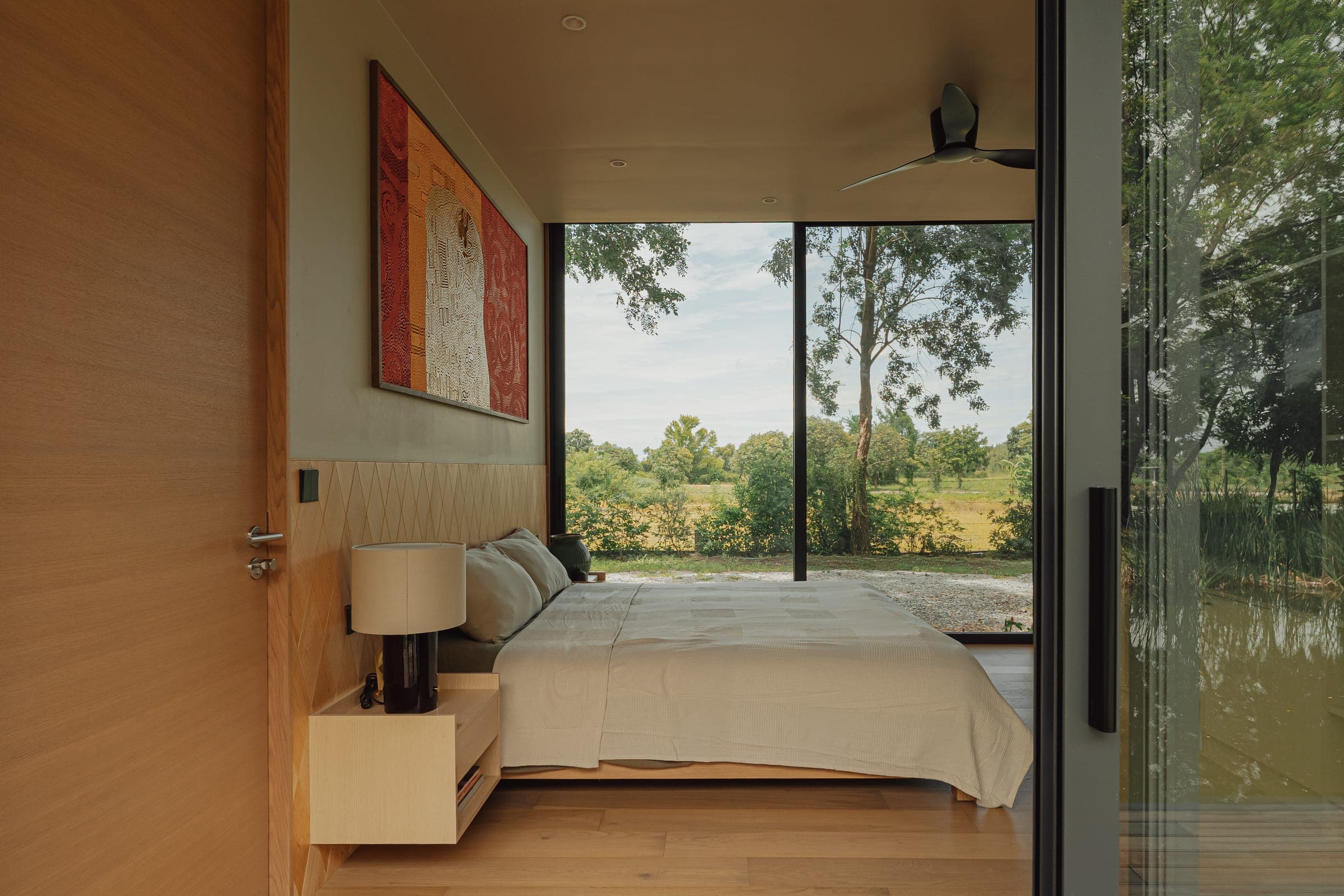
Yes. INK completed a highland retreat in Khao Kho, Phetchabun, in 2024. It sits in pine forest at 1,200 metres and uses a single Sati M module extended with a covered terrace, designed to sit lightly on the slope and frame long views across the valley below. The same team built it from foundation to finish.
Sati M is a 79 m² single-storey home with one bedroom, a walk-in closet and floor-to-ceiling glazing, on a steel beam structure and concrete foundation. It starts from ฿2,900,000 excluding VAT and is completed within four months from contract. Site work on a mountain plot is priced separately.
See photographs of the home on the projects page, or talk to INK about your land in Khao Kho.
What should you verify before buying or building on land in Khao Kho?
Before building in Khao Kho, verify the land title, boundary survey, legal road access, zoning or local restrictions, slope conditions, and utility reach. A beautiful view plot can still be expensive or risky if it needs major retaining work, long power extensions, or complicated permit clarification with district authorities.
Start with the title deed and a current land survey through Thailand's Department of Lands. In hillside areas, buyers should confirm that the usable building platform matches the deed boundaries and that access roads are legally established, not just informally used. It is also wise to check whether the plot sits near agricultural controls, water paths, or steep cut areas that could increase earthwork and drainage risk during heavy rain.
- Confirm chanote or other title status with the Department of Lands.
- Check practical vehicle access for concrete trucks, cranes, and delivery vans.
- Review slope, soil behavior, runoff direction, and retaining requirements.
- Ask about nearby electricity and water connection distances with PEA or PWA.
How do permits and approvals usually work in Khao Kho?
Most house builds in Khao Kho require a formal design set and an application process handled through the relevant local authority, typically involving building drawings, structural information, ownership documents, and site details. Approval timelines vary, so permit review should be built into the schedule before fabrication, procurement, or foundation work begins.
Thailand permit procedures depend on the local administrative body and the specifics of the project, so owners should confirm requirements early with the district or municipality and align drawings accordingly. Typical submissions include architectural plans, structural plans, ownership or land-use documents, and identification records. If the design uses unusual spans, steep terrain solutions, or retaining systems, more detailed engineering may be needed before approval is granted.
- Confirm the responsible local office for the plot.
- Prepare architectural, structural, and site drawings.
- Submit land documents, owner documents, and supporting forms.
- Wait for review before starting site work or ordering locked-in materials.
How does Khao Kho's climate affect house design and construction?
Khao Kho's cooler temperatures, mountain fog, and seasonal rain make moisture control and drainage essential. Roof overhangs, ventilation, flashing, sealed openings, and careful site water management matter as much as aesthetics. Homes that ignore runoff, condensation, or wind exposure often face leaks, mold, timber movement, and higher maintenance sooner than expected.
The Thai Meteorological Department's climate data is useful for planning weather exposure, but site position matters just as much in Khao Kho because ridgelines, valleys, and tree cover change wind and moisture behavior. A mountain house should prioritize roof drainage, protected entrances, durable exterior materials, and wall assemblies that can dry out properly. Covered walkways, raised thresholds, and serviceable gutters are practical choices, especially through the wetter parts of the year.
| Condition | Design response | Why it matters |
|---|---|---|
| Heavy seasonal rain | Strong drainage plan and generous roof overhangs | Reduces erosion, splashback, and leaks |
| Morning fog and humidity | Ventilation and moisture-tolerant finishes | Helps limit condensation and mold |
| Cool nights and sun exposure | Shading plus insulated roof strategy | Improves comfort without overreliance on air-conditioning |
What site and infrastructure issues change the budget in Khao Kho?
In Khao Kho, site access, utility extension, slope work, drainage, and retaining structures can add substantial cost before the house shell even starts. A plot with difficult road access or long electrical runs may cost more overall than a simpler site, even if the land purchase price initially looks attractive.
Mountain logistics often reshape budgets. If trucks cannot reach the site directly, materials may need smaller transport stages, more labor handling, or temporary road improvements. Electricity from the Provincial Electricity Authority and water arrangements through local supply or storage systems can also require separate spending. Owners should compare not just construction rates per square meter, but also earthworks, stormwater control, utility setup, and long-term service access for repairs.
What construction approach works well for a house in Khao Kho?
A good Khao Kho construction approach reduces wet-work risk, shortens on-site exposure, and fits the access constraints of the land. The right system depends on span, slope, finish level, and transport conditions, but every option should prioritize engineering, moisture detailing, and staged logistics over speed claims alone.
Conventional reinforced concrete, steel framing, and modular or panelized systems can all work in Phetchabun if they are engineered for the site. On steeper or harder-to-access plots, reducing on-site duration may help quality control during rainy periods and lower disruption from weather delays. The key comparison points are structural suitability, transportability, skilled installation, maintenance needs, and how well the system integrates foundations, drainage, insulation, and envelope detailing.
What is a realistic planning checklist for building in Khao Kho?
A realistic Khao Kho checklist moves from land validation to site study, permit alignment, utility confirmation, cost planning, and weather-aware scheduling. Owners who front-load these decisions usually avoid the most expensive mistakes, especially on sloped plots where drainage, access, and retaining design are harder to correct once construction begins.
A disciplined sequence helps. First, validate the land and access. Second, survey the site and establish levels, runoff paths, and geotechnical needs. Third, align the concept with permit requirements and utility realities. Fourth, price the full project, including external works and contingencies. Finally, schedule around wet-season risk and procurement lead times. In many remote or upland builds, a 10% to 15% contingency is more realistic than assuming a frictionless delivery process.
- Verify title, access, boundaries, and utility proximity.
- Survey the land and study slope, drainage, and soil conditions.
- Develop permit-ready design and engineering documents.
- Price house works, external works, logistics, and contingency together.
Key takeaways
- Verify title deed, boundaries, road access, and utility distance before committing to a Khao Kho plot.
- Mountain drainage, slope stability, and retaining design can materially change total project cost.
- Permit timing should be confirmed locally before fabrication, procurement, or foundation work begins.
- Khao Kho's rain, fog, and cooler nights require moisture-aware detailing and durable exterior materials.
- Budget for transport complexity, utility extensions, and a contingency of around 10% to 15% on challenging sites.
Frequently asked questions
Can foreigners build a house in Khao Kho, Phetchabun?
Yes, but usually not on land they own. A foreigner can own the house and hold the land through a registered lease of up to 30 years, a superficies or a usufruct, or build on land owned by a Thai spouse. Check every arrangement with a licensed Thai lawyer before buying land in Khao Kho.
Is Khao Kho more expensive to build in than other parts of Thailand?
It can be, especially when the site is steep, remote, or far from utilities. In Khao Kho, transport, retaining walls, drainage, and electrical connection distance may add meaningful cost beyond the house structure. A cheaper plot can end up costing more overall if access and ground conditions are difficult.
Do I need a soil test or engineering review for a hillside plot?
For many hillside or uneven plots, a soil investigation or engineering review is strongly advisable before finalizing foundations and drainage. Even when not formally complex, sloped land can hide runoff issues, fill instability, or retaining demands. Early technical review usually costs far less than fixing settlement or water problems later.
What is the biggest mistake people make when building in Khao Kho?
A common mistake is focusing on the view and house style before checking practical buildability. In Khao Kho, legal access, drainage paths, slope stability, and utility connection can determine both approval and cost. Skipping those checks early often leads to redesigns, delays, and avoidable spending once construction has started.
Can a modular home be built in Khao Kho?
Yes. INK's highland retreat in Khao Kho is a Sati M module set on a pine-forest slope at 1,200 metres, extended with a covered terrace. The modules are fabricated in INK's workshop while the foundation is prepared, which shortens the time spent working on the mountain during wet or misty weather.
This guide is general information and does not replace legal, surveying, engineering or permit advice. Local requirements in Khao Kho and Phetchabun can change; confirm them with the local authority. Details of INK's Khao Kho home come from its published project page. Drafted with AI assistance and reviewed against INK's published information. Published by INK Homes.