
Modular home vs traditional construction in Thailand: which should you choose?
A modular home is built from modules fabricated in a workshop and assembled on site. A traditional Thai house is built piece by piece on the plot. Modular construction is typically faster — INK completes a Sati home within four months from contract — and less exposed to rainy-season delays.
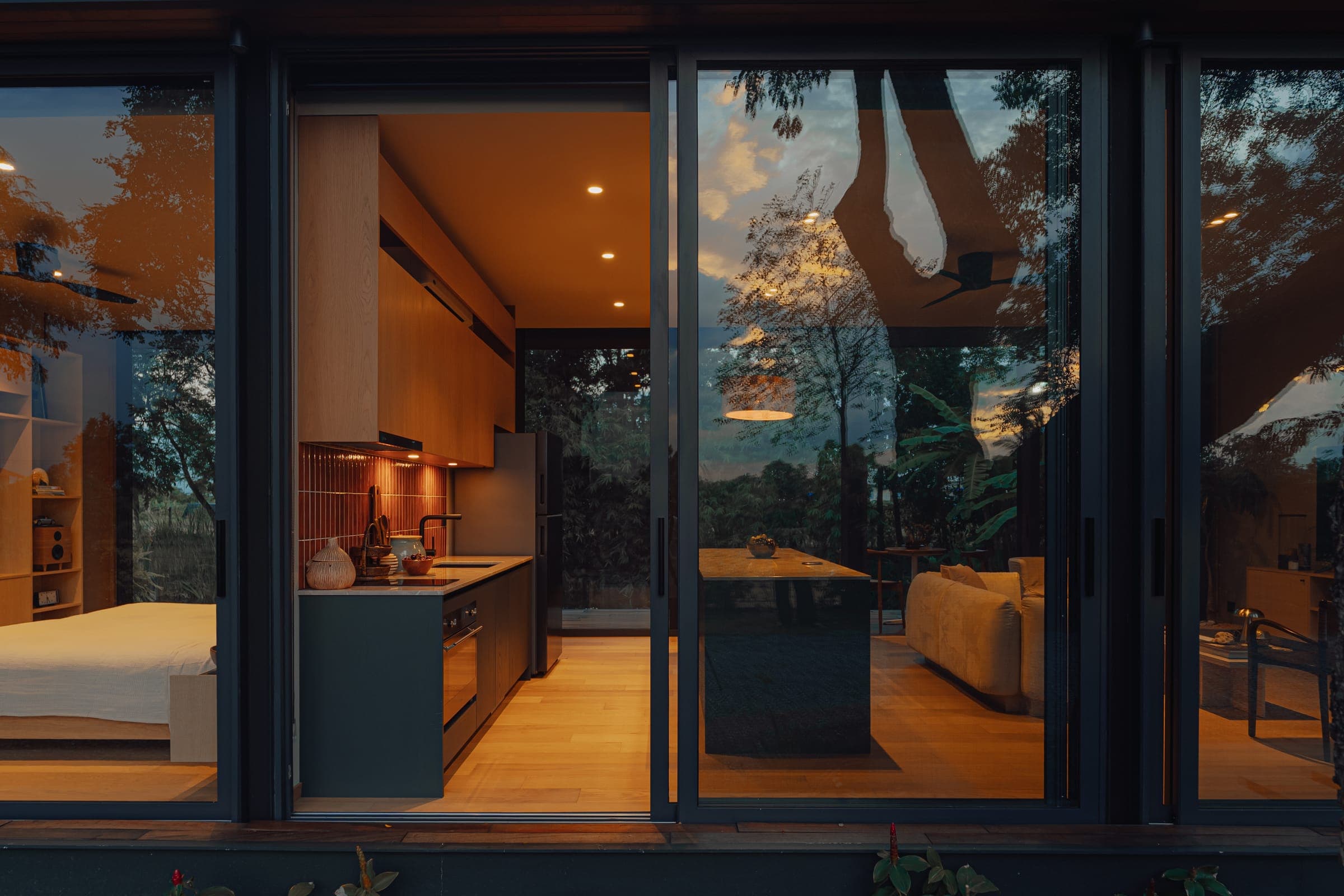
In Thailand, most houses are still built the conventional way: a reinforced concrete frame and brick or block walls, raised on site by a main contractor who brings in separate trades for the roof, joinery, electrics and finishing. Modular construction moves much of that work into a workshop, where structural modules are made to a single standard before they reach your land.
Neither method is right for every project. This guide compares them on the points that matter most when you are building in Thailand — time, weather, quality control, durability and permits — drawing on how INK Homes builds its Sati homes.
What is the difference between modular and traditional construction?
Traditional construction builds a house on the plot from raw materials, stage by stage, usually through a chain of contractors. Modular construction fabricates the structure as finished modules in a workshop, then transports and assembles them on a prepared foundation. The result is a permanent house either way; the difference is where, and by whom, the work is done.
| Factor | Modular (INK Sati) | Traditional on-site build |
|---|---|---|
| Where the structure is made | In INK's own workshop | On the plot |
| Who builds it | One in-house team, foundation to final fitting | Main contractor plus separate trades |
| Typical time to handover | Within 4 months from contract (Sati M and Sati L) | Often a year or more, depending on contractor and weather |
| Exposure to rain | Most fabrication happens under cover | Most work happens outdoors |
| Price format | Fixed starting price for a fitted home | Usually quoted per stage or per square metre |
How long does each method take in Thailand?
INK completes both the Sati M and the Sati L within four months from contract. A conventionally built house of similar size often takes a year or more, because each trade waits for the one before it and on-site work stops in heavy rain. Permits and land preparation add time to both methods.
Speed comes less from the modules themselves than from removing handovers. When one team handles structure, joinery and finishing, there is no gap between contractors and no waiting for the next trade to become available. That is the core of INK's one team, start to finish approach.
How does Thailand's rainy season affect construction?
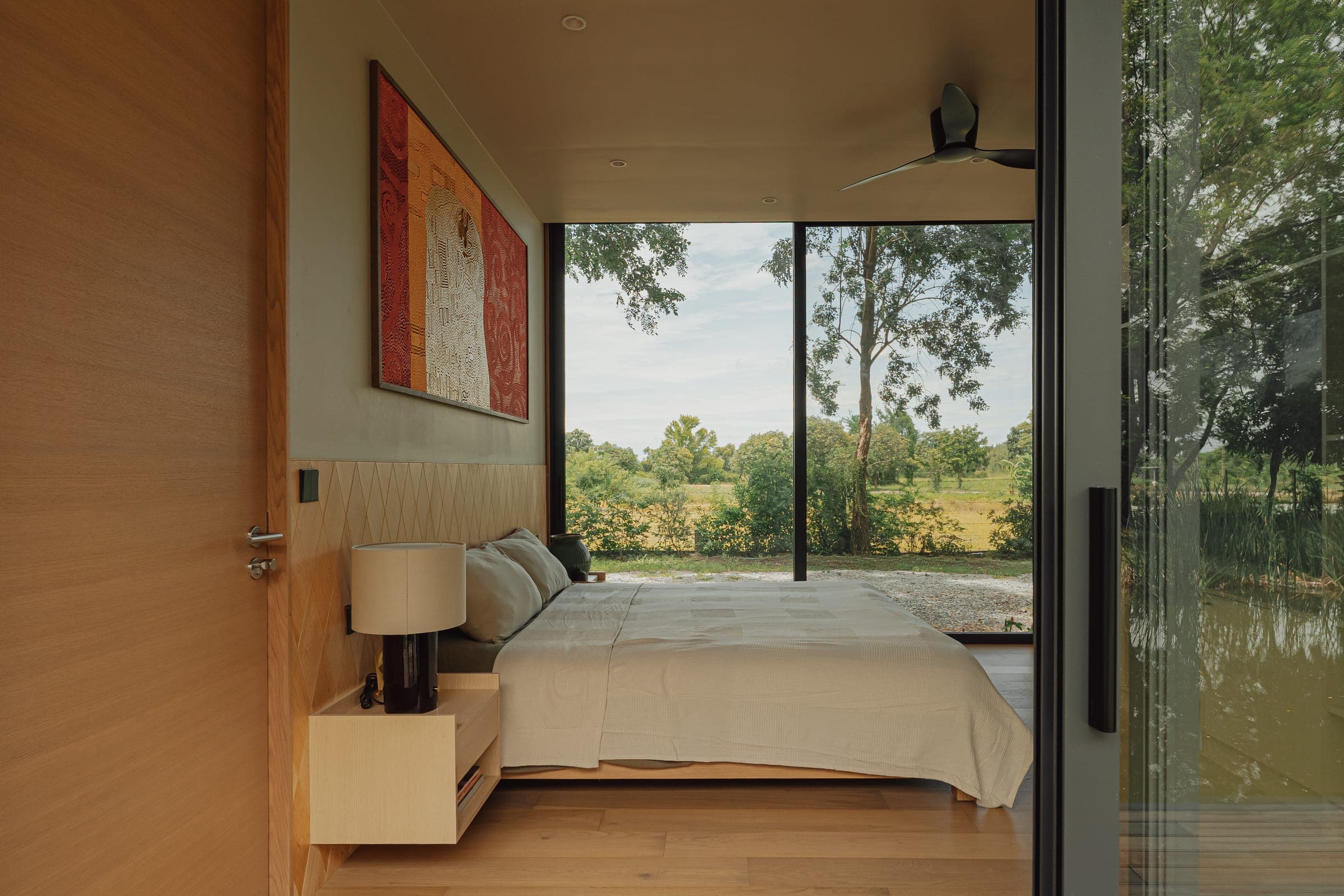
Thailand's rainy season runs roughly from mid-May to mid-October, according to the Thai Meteorological Department. Heavy rain stops concrete work, masonry and finishing on an open site, so traditional builds often lose weeks. Modular construction keeps most fabrication in a workshop, so the weather mainly affects foundation work and on-site assembly.
If you are planning around a particular season — finishing a holiday home before peak travel months, for example — ask any builder how their schedule handles the monsoon. The Thai Meteorological Department publishes seasonal outlooks for each region; the Andaman coast and the upper north can differ noticeably.
How is quality controlled in each approach?
In a traditional build, quality depends on how well several separate contractors coordinate, and details are often lost between trades. In modular construction, work happens in a controlled workshop to one standard. At INK, the same in-house team fabricates the modules, assembles them on site and completes the final fitting, so responsibility never changes hands.
Ask any builder who is responsible for each stage, and what happens when a problem appears at the boundary between two trades. With a single team, the answer is simple; with a chain of subcontractors, it is worth getting in writing.
Is a modular home as durable as a traditional house?
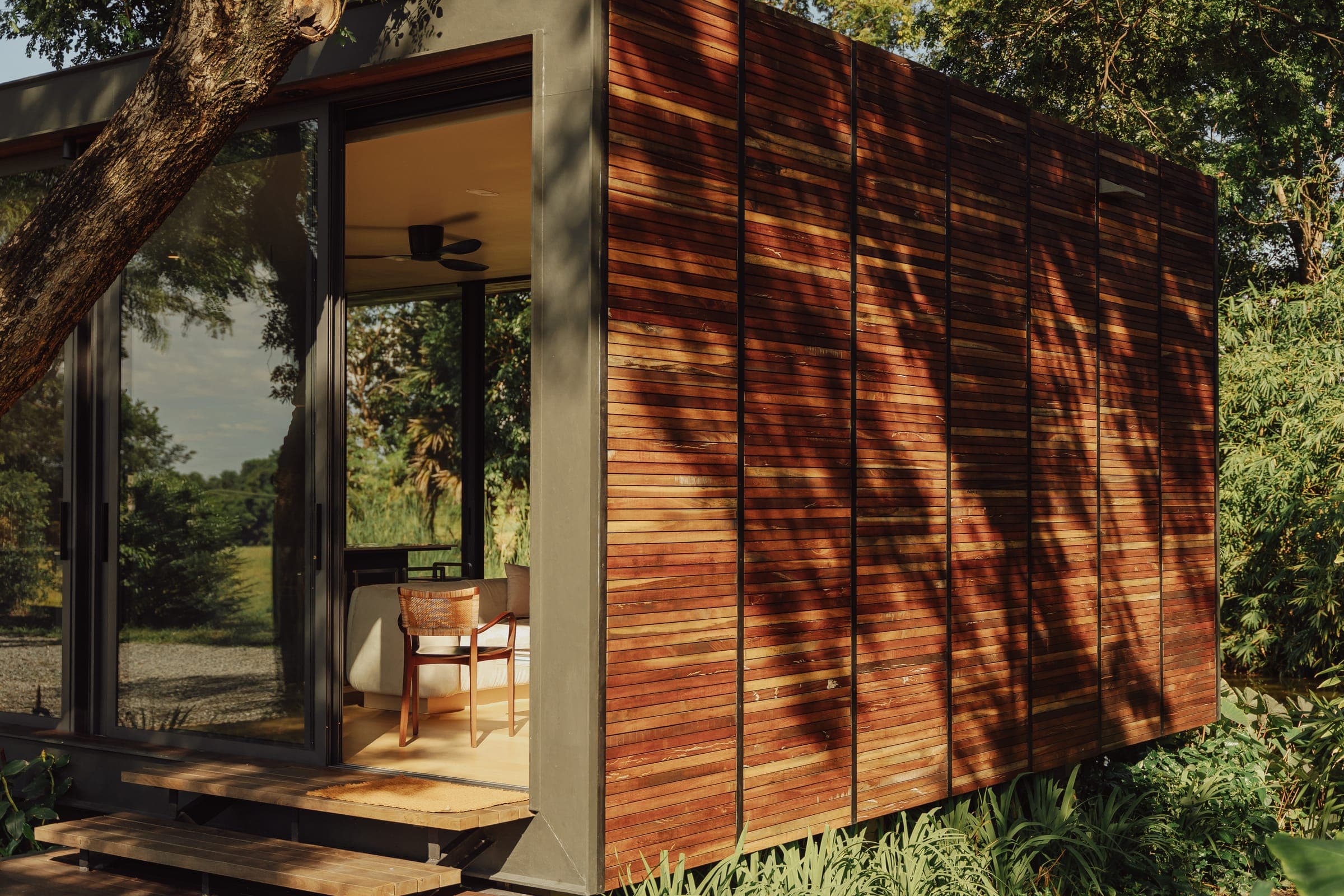
Yes, when it is engineered and founded properly. Durability depends on the structure, foundation and materials rather than on where the house was assembled. A Sati home uses a steel beam structure on a concrete foundation, Euro-standard aluminium window frames and UV-protected laminated glass — a permanent building, not a temporary cabin.
Factory-built housing in Thailand ranges from site offices to finished homes, so compare specifications rather than labels. Check the structural system, the foundation, the glazing and how joints between modules are resolved. The Sati specification lists each of these.
Does a modular home need a building permit in Thailand?
Generally yes. A modular home is a building, so the same rules apply as for a conventional house. Under the Building Control Act B.E. 2522, construction in areas where the Act applies needs approval from the local authority, such as the municipality or Subdistrict Administrative Organisation. Confirm the requirements for your plot before construction begins.
Local rules on setbacks, height and land use can also apply, particularly near the coast, in national park buffer zones and on steep slopes. Your local authority office can confirm what applies to a specific title deed.
Which method suits a second home in Thailand?
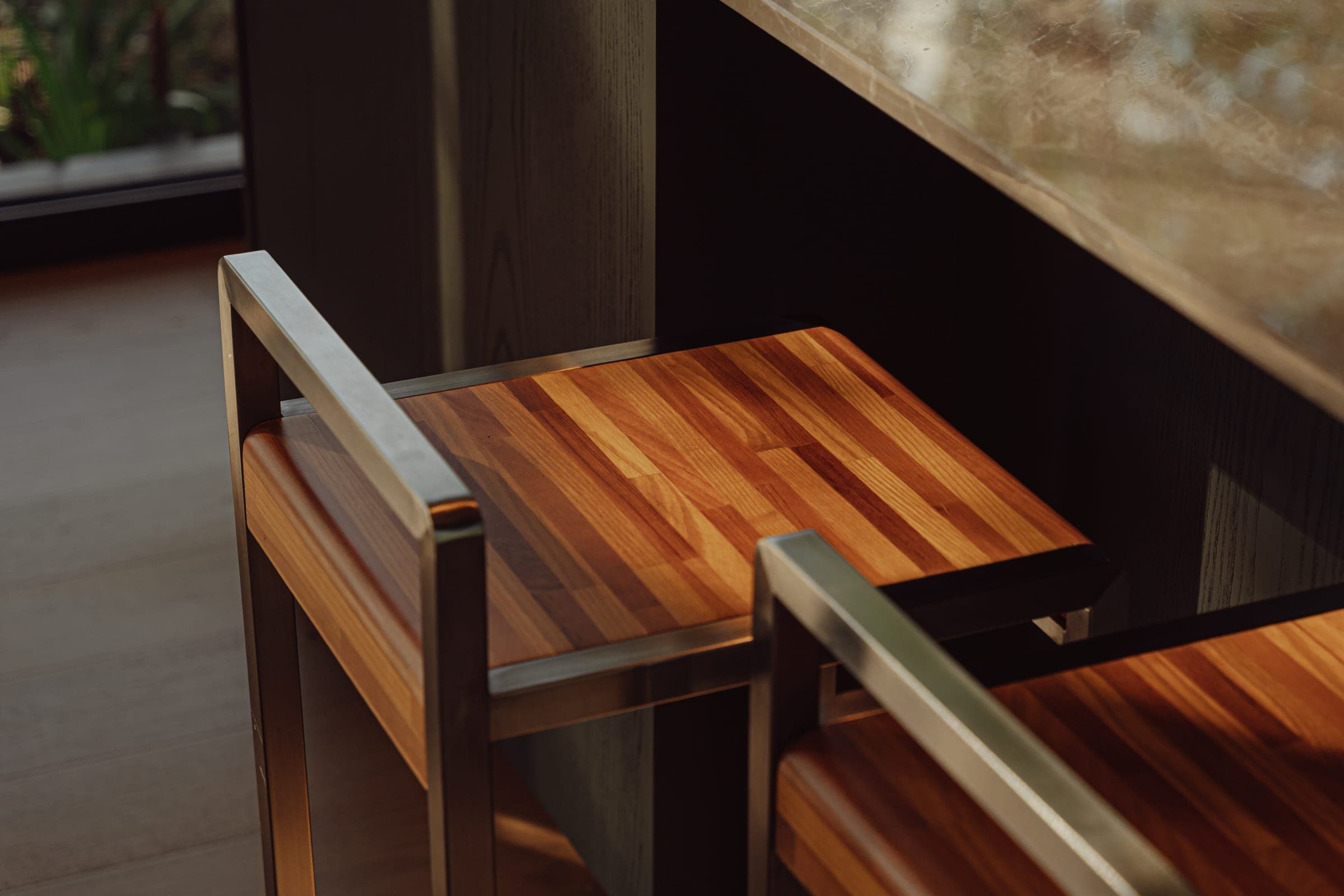
Modular construction usually suits a second home better. Owners of holiday or weekend homes are rarely on site to supervise a long build, and remote plots make coordinating several contractors harder. A fixed scope, a single team and a build of four months or less reduce the number of decisions and site visits needed from afar.
Traditional construction remains the better fit when a design is highly irregular or the site cannot take delivery of large modules. INK's completed homes in Khao Kho and Phuket both sit on sloping ground, which shows how far a modular home can adapt to its setting.
Key takeaways
- Modular homes are fabricated in a workshop and assembled on site; traditional Thai houses are built stage by stage on the plot.
- INK completes a Sati home within four months from contract, against a year or more for many conventional builds.
- Thailand's rainy season, roughly mid-May to mid-October, delays open-site work far more than workshop fabrication.
- Durability depends on structure, foundation and materials — not on whether a house was assembled from modules.
- Modular homes still need building approval from the local authority, just like a conventionally built house.
Frequently asked questions
Is a modular home cheaper than a traditional house in Thailand?
It depends on what is being compared. Traditional quotes are often per square metre for the structure alone, while a Sati price covers a fitted home with air conditioning, furniture and appliances. Compare complete scopes, and include the carrying costs of a longer build, such as rent and finance, before deciding.
Can a modular home be built on a slope?
Yes. Both completed INK homes sit on sloping ground: a highland retreat in Khao Kho, Phetchabun, designed to sit lightly on the slope, and a Sati L on a hillside plot in Phuket. Slopes may need extra foundation or retaining work, which is assessed for each plot.
Is a modular home a permanent building?
Yes. A Sati home sits on a concrete foundation with a steel beam structure, and is designed and finished as a permanent residence. In Thailand it is treated as a building like any other house, so it needs the same local approvals and is built to last for generations.
How long does it take to build a modular home in Thailand?
With INK, both the Sati M and the Sati L take no more than four months from contract. Time for permits and land preparation depends on the plot. A conventionally built house of a similar size often takes a year or more, especially when work runs through the rainy season.
Build times and specifications come from the INK Homes SATI catalogue. Timelines for conventional construction are general observations and vary by contractor, region and season. Permit information is general guidance, not legal advice; confirm requirements with your local authority. Drafted with AI assistance from INK's published information. Published by INK Homes.