
Is a steel frame house a good choice in Thailand?
A steel frame house can be a very good choice in Thailand when it is engineered and detailed for heat, monsoon rain, humidity and, near the sea, salt air. Steel is precise, termite-proof and fast to assemble. INK's Sati uses a steel beam structure on a concrete foundation and is built within four months.
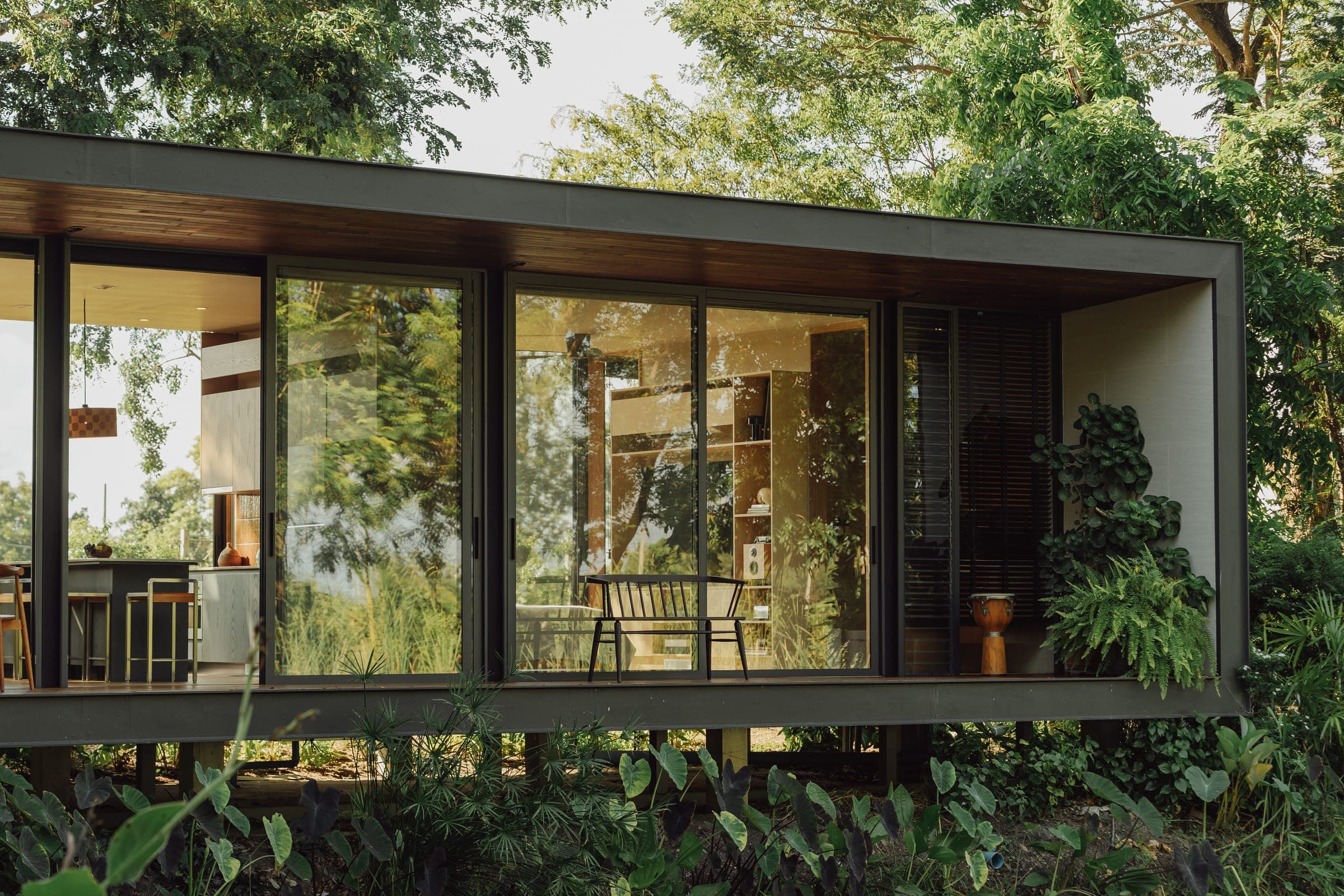
Steel framing is a strong fit for Thailand when the details are right. The frame itself does not rot, warp or attract termites, and it is made to exact dimensions in a workshop. What decides how long a steel house lasts is how it is protected, insulated, glazed and drained.
INK's Sati pairs a dark charcoal steel frame with floor-to-ceiling glazing. This guide explains why, and what to check with any steel frame builder.
Is a steel frame house suitable for Thailand's climate?
Yes, a steel frame house suits Thailand's climate if it is designed for it. Steel is unaffected by termites and does not warp in humidity. The work is in the details: protective coatings, roof and wall drainage, insulation against heat, and glazing that controls the sun. Badly detailed steel suffers; well-detailed steel lasts.
Thailand has three seasons, hot, rainy and cool, and the Thai Meteorological Department publishes regional rainfall and temperature data. Design for your region: highland mist in Khao Kho is a different problem from salt air in Phuket.
What are the advantages of a steel frame house?
The main advantages are precision, speed and resistance to termites. Steel members are made to exact dimensions, so joints and glazing fit as designed. Much of the work happens in a workshop, which shortens time on site and reduces exposure to the rainy season. Steel also allows long, open spans for wide glazing.
- Precision — workshop-made members fit to tight tolerances.
- Speed — less wet work on site; INK builds a Sati home within four months from contract.
- Termite resistance — no timber in the primary structure for termites to attack.
- Open spans — room for floor-to-ceiling glass and open-plan living.
What are the risks of a steel frame house in Thailand?
The main risks are corrosion, heat gain and condensation, and almost all of them come from detailing rather than from steel itself. Unprotected or damaged coatings rust, especially near the sea. Poor insulation lets heat through the frame. Missing flashing lets rain into joints. Ask how each risk is handled.
- Corrosion — ask for the coating specification, and extra protection for coastal sites.
- Heat — ask how the roof and walls are insulated and how the glass is shaded.
- Water — ask how roof edges, window heads and floor junctions are flashed and drained.
- Engineering — structural drawings should be signed by a licensed engineer; the Council of Engineers lists registered members.
How is INK's Sati built?
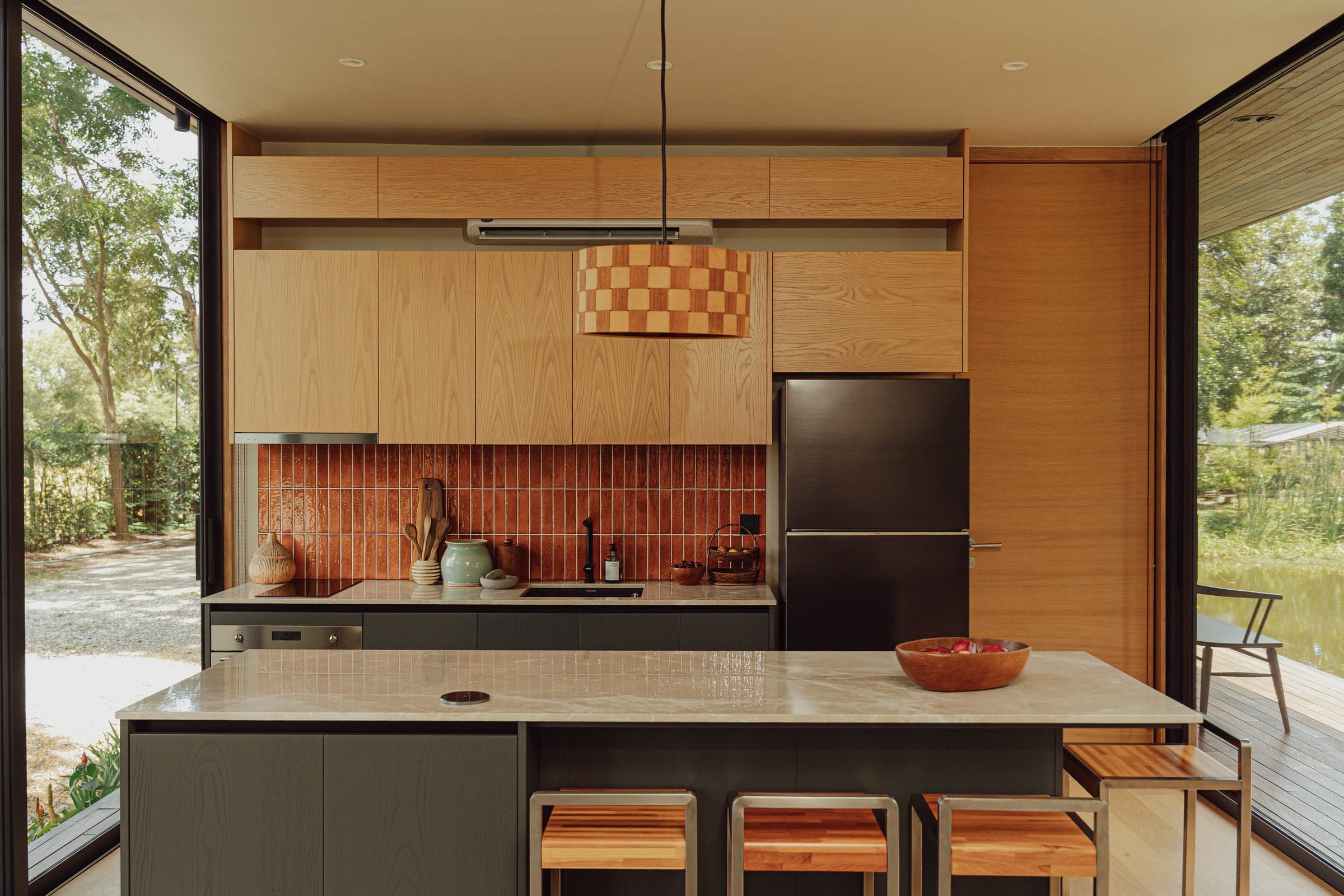
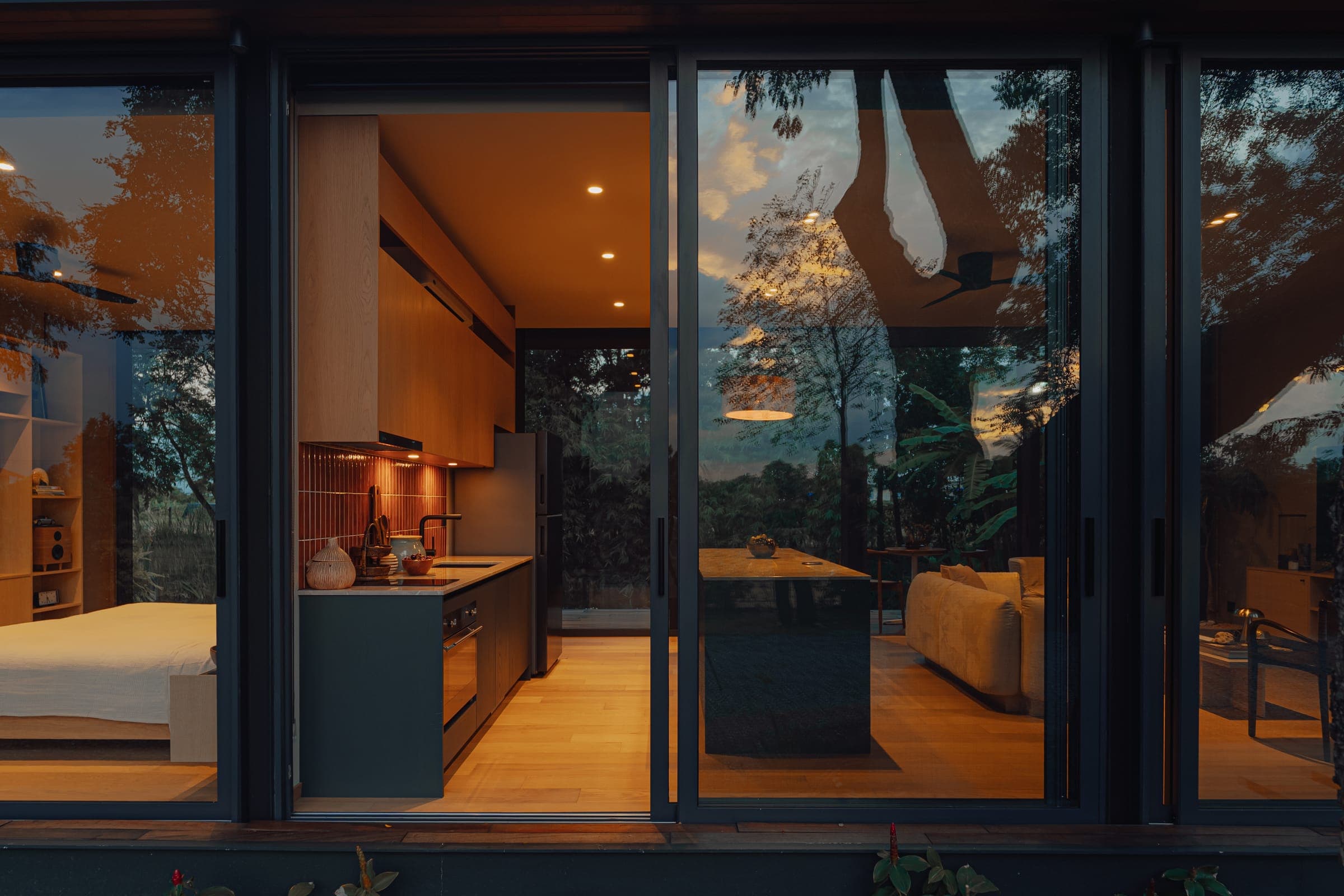
Sati uses a steel beam structure on a concrete foundation, with Euro-standard aluminium window frames in a dark charcoal steel finish and 3+3 mm UV-protected laminated glass. Structural modules are fabricated in INK's own workshop and assembled on site by the same team that completes the joinery and finishes.
| Element | Specification |
|---|---|
| Structure | Steel beam |
| Foundation | Concrete foundation |
| Window frames | Euro-standard aluminium, dark charcoal steel |
| Glazing | 3+3 mm UV-protected laminated glass |
| Ceiling height | 2.80 m |
| Air conditioning | Full system included |
INK's completed homes put this structure in two demanding settings: pine forest at 1,200 metres in Khao Kho and a hillside above the Andaman Sea in Phuket.
Is a steel frame house more expensive than concrete in Thailand?
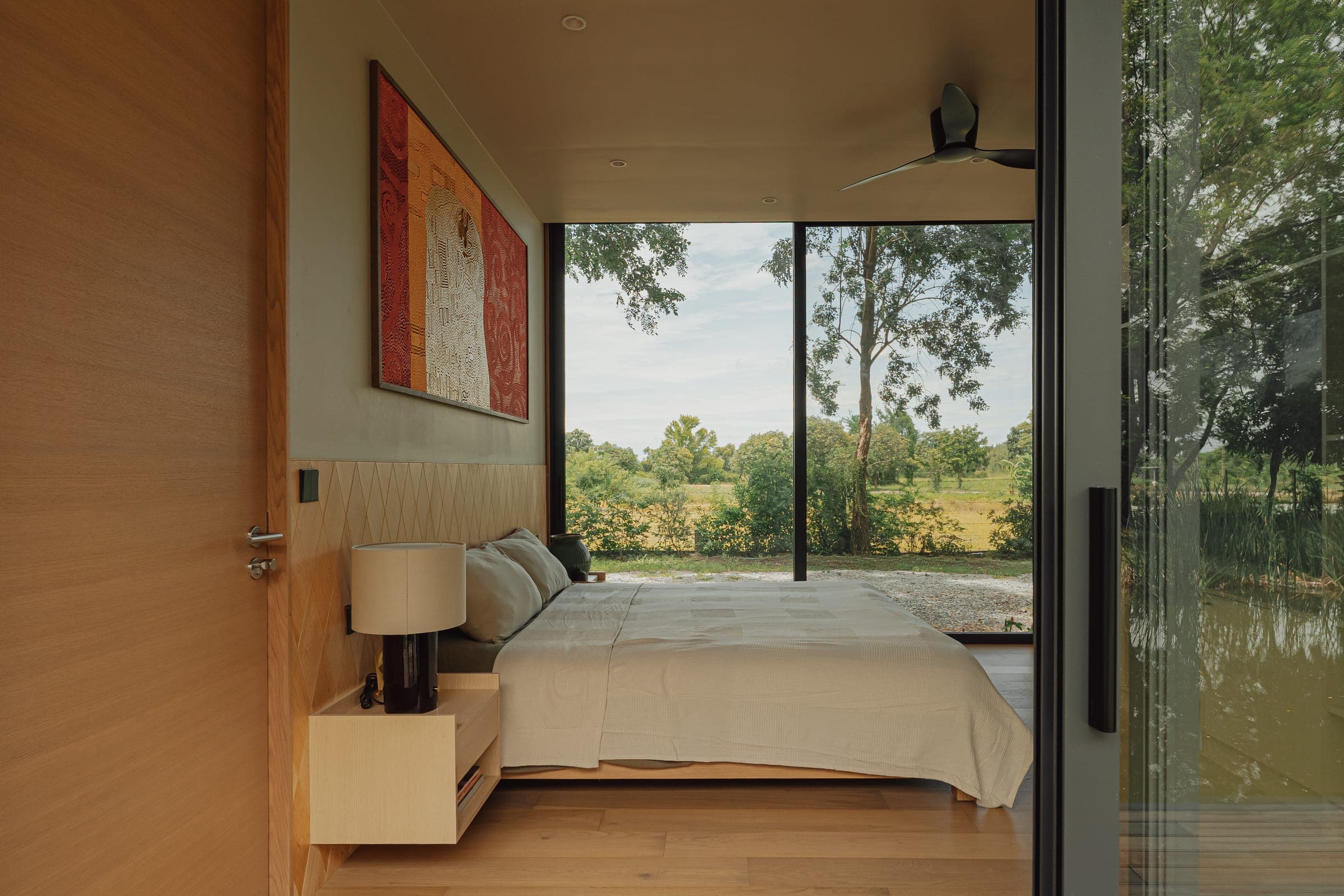
Not necessarily. Steel members can cost more per tonne than concrete, but faster building, less wet work and fewer delays reduce other costs. Compare finished homes, not frames. INK's steel-framed Sati starts from ฿2,900,000 excluding VAT for the 79 m² Sati M, fully fitted with furniture, appliances and air conditioning.
| Sati M | Sati L | |
|---|---|---|
| Area | 79 m² | 113 m² |
| Dimensions | 12.50 × 6.35 m | 17.50 × 6.35 m |
| Bedrooms / bathrooms | 1 / 1 + guest toilet | 2 / 2 + guest toilet |
| Starting price (excl. VAT) | ฿2,900,000 | ฿4,100,000 |
| Build time from contract | Within 4 months | Within 4 months |
What should you ask a steel frame house builder?
Ask a steel frame builder who engineers the structure, how the steel is protected against corrosion, how roofs, walls and window junctions are kept watertight, how heat is managed, and where the frame is made. Ask to see a completed home that has been through at least one rainy season.
- Who designs and signs the structural drawings?
- What is the coating specification, and how is it repaired after installation?
- How are roof edges, window heads and floor junctions flashed?
- How are the roof and walls insulated, and what glass is used?
- Where is the frame made, and by whom?
Read more in modular versus traditional construction, or ask INK about your site.
Key takeaways
- Steel frame houses suit Thailand when coatings, drainage, insulation and glazing are detailed well.
- Steel is precise, fast to assemble, termite-proof and allows wide glazing.
- The main risks, corrosion, heat and water, come from detailing, not from steel itself.
- INK's Sati uses a steel beam structure on a concrete foundation with UV-protected laminated glass.
- Ask a builder about engineering, coatings, flashing, insulation and where the frame is made.
Frequently asked questions
Is a steel frame house hotter than a concrete house in Thailand?
Not if it is designed properly. Heat comes in mainly through the roof and glass, not the frame. Insulation, shading and the right glass matter more than the structural material. Sati uses UV-protected laminated glass and a full air-conditioning system, and good site orientation reduces afternoon heat gain further.
Does a steel house rust near the sea in Thailand?
Steel near the sea needs more protection, because salt air speeds up corrosion. Ask about the coating specification, how cut edges and welds are protected, and how the coating is inspected and maintained. INK's Phuket home, a Sati L on a hillside above the Andaman Sea, was completed in 2024.
How long does a steel frame house last?
A well-designed and maintained steel frame house can last for many decades. Its life depends on the coating, drainage and maintenance rather than the steel itself. Keep gutters clear, inspect coatings at exposed junctions, and repair damage promptly. Ask your builder for a maintenance schedule at handover.
Are steel frame houses safe in storms and earthquakes?
Steel frames are strong for their weight and flexible, which helps under wind and seismic loads when they are engineered for the site. In Thailand, structural design should be done and signed by a licensed engineer to the applicable standards. Ask who engineered the frame and for which loads.
This guide is general information and does not replace legal, engineering or permit advice; confirm local requirements with your local authority. Facts about INK and Sati come from the Sati catalogue and INK's project pages. Drafted with AI assistance and reviewed against INK's published information. Published by INK Homes.