
How do you choose a modular home builder in Thailand?
Choose a modular home builder in Thailand by checking engineering for the Thai climate, permit support and production quality. Then compare transparent scope, pricing and warranty service. The right builder can explain structure, logistics, site work and exclusions in writing before you sign.
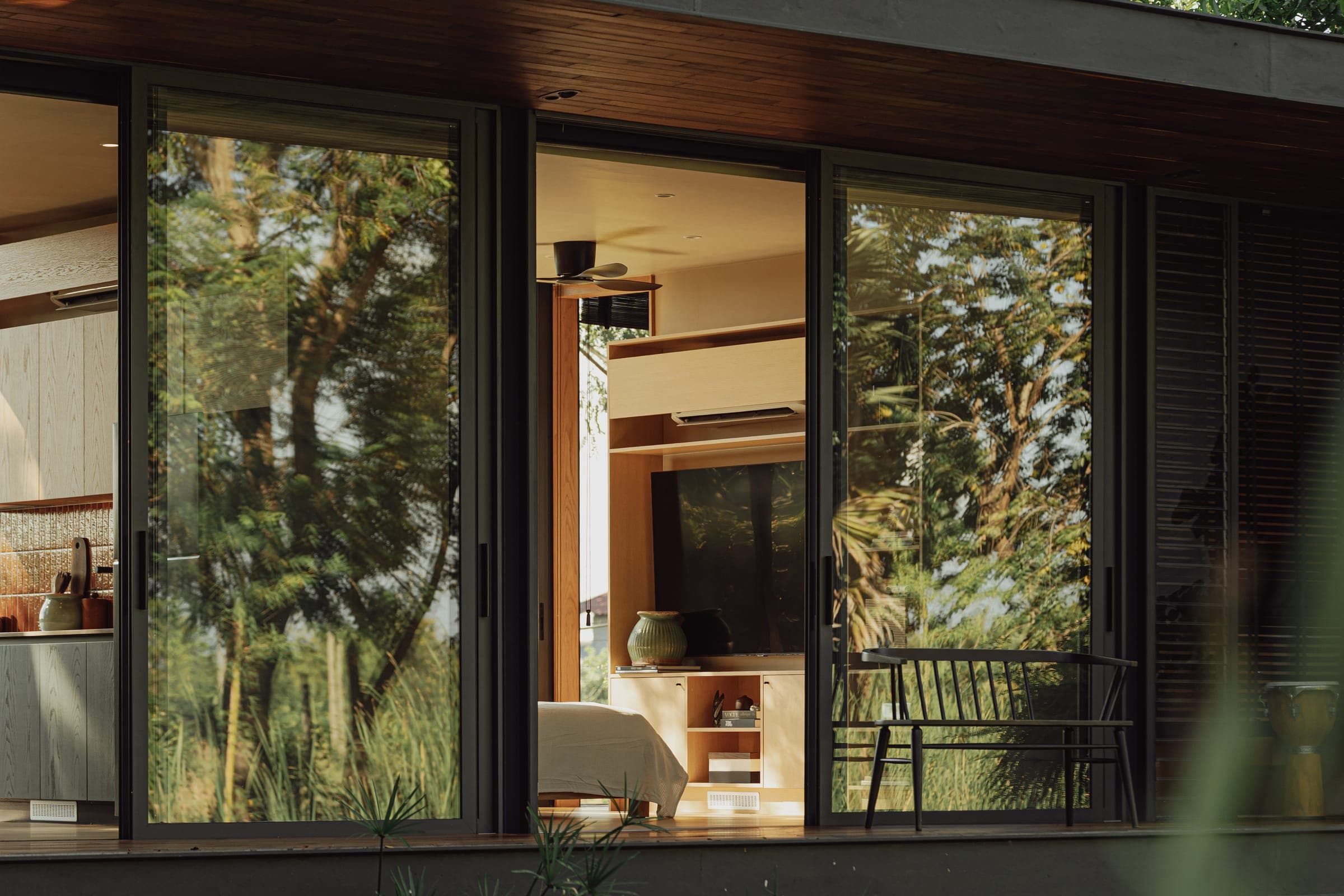
The right way to choose a modular home builder in Thailand is to compare builders on engineering, permits, factory controls, pricing clarity, logistics, and after-sales support rather than only headline price. A credible builder should show how modules are designed for heat, humidity, rain, transport stress, and local site conditions, while also explaining what is included in the contract and what remains the client's responsibility.
- Ask for structural, MEP, and foundation responsibilities in writing.
- Verify permit support with your local authority before paying a deposit.
- Review factory processes, material specifications, and transport method.
- Compare quotations line by line, including exclusions and provisional sums.
What should you check first when comparing modular home builders in Thailand?
Start with the builder's ability to deliver a complete Thai project, not just a factory module. Check structural design, permit support, site works, logistics, utility connections, and exclusions. A dependable builder can map the full path from design and approvals to installation, handover, and warranty service in writing.
Begin by asking each builder for a complete project scope: design, engineering, factory production, transportation, craning if needed, foundation coordination, installation, MEP hookups, interior finishes, and defect support. In Thailand, site conditions vary widely between Bangkok, Phuket, Chiang Mai, and Isan, so a builder that understands local drainage, road access, and utility availability reduces expensive surprises later.
- Scope of design, engineering, production, delivery, installation, and handover
- Permit guidance and document package for local submission
- Foundation interface, utility connections, and site-access planning
- Written exclusions, provisional sums, and post-handover responsibilities
How do you verify a builder's engineering and code readiness in Thailand?
Verify that the builder can explain structural loads, material specifications, and permit documentation relevant to Thailand. They should coordinate with licensed professionals, provide clear drawings, and address wind, moisture, corrosion, insulation, and electrical safety. If answers stay vague, the project risk usually shifts to the buyer.
Ask who signs off on structural and MEP drawings, what standards guide the work, and how the home is adapted for tropical weather. In coastal areas, corrosion resistance matters more; in heavy-rain areas, roof drainage and envelope detailing matter more. Builders should also explain how modules are connected on site and how foundations are coordinated with the superstructure and services.
- Structural drawings and calculation responsibility
- Wall, roof, insulation, waterproofing, and anti-corrosion specifications
- Electrical and plumbing layouts suitable for local utility conditions
- Permit document set aligned with your local authority and engineer requirements
Useful reference points include the Department of Public Works and Town & Country Planning, the Engineering Institute of Thailand, and product certification from TISI. A serious builder may not control every approval outcome, but should clearly document what they provide and what your appointed professionals or local office require.
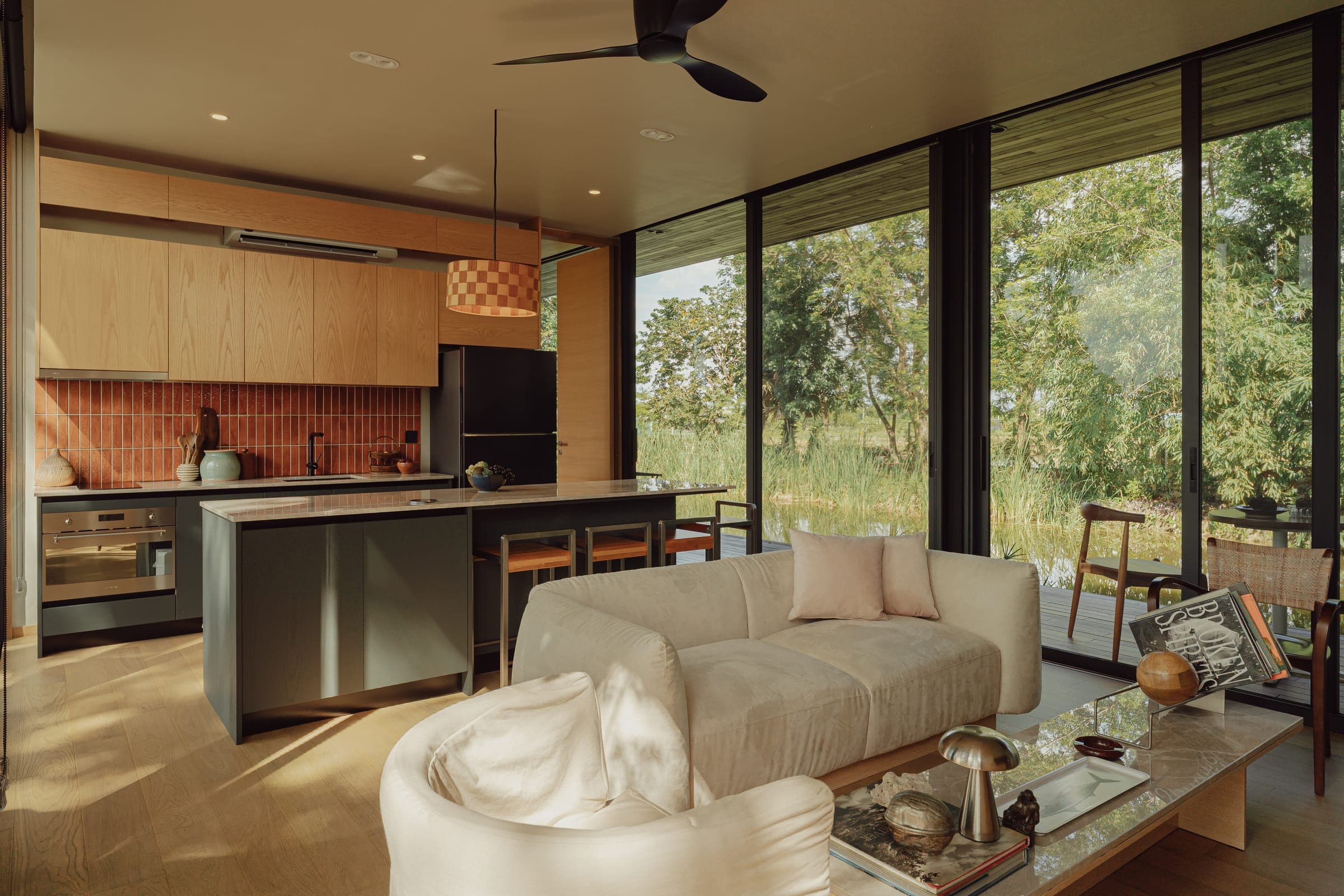
Why does factory quality matter as much as design?
Factory quality matters because modular homes are built through repeatable production steps that affect fit, durability, and installation speed. The best choice is a builder with visible quality controls, documented material handling, inspection checkpoints, and accountability for defects before modules leave the factory for your Thai site.
A polished rendering does not prove build quality. Ask to see the production environment, joinery standards, moisture protection during storage, and how components are checked before shipment. Good factories use repeatable processes, standard details, and inspection records. That matters in Thailand because transport, humidity, and rapid installation can expose weak tolerances, poor sealing, or inconsistent finishes very quickly.
| Check | Why it matters | What to ask |
|---|---|---|
| Inspection checkpoints | Reduces hidden defects before delivery | When are structure, MEP, finishes, and waterproofing inspected? |
| Material storage | Protects boards, steel, wiring, and finishes from moisture | How are materials stored during rainy periods? |
| Mockups or samples | Shows real finish quality, not only renders | Can I inspect a completed unit or sample corner? |
| Pre-delivery testing | Finds issues before transport | What is tested before a module leaves the factory? |
How should you compare modular home prices and contracts?
Compare modular home prices in Thailand only after normalizing scope. A lower number may exclude foundation works, transport, crane access, permits, utility connections, or interior items. The safer contract is the one that clearly defines inclusions, exclusions, payment stages, variation rules, and defect liability after installation.
Request a line-by-line proposal or BOQ rather than a single lump sum. Clarify whether VAT, design revisions, kitchen equipment, air-conditioning, terraces, septic works, and utility fees are included. Ask how payment milestones are triggered: design approval, factory start, completion in factory, delivery, installation, and handover are common stages. The clearer the contract, the easier it is to control budget drift.
- Separate factory cost from site works and utility scope
- Confirm transport distance assumptions and crane requirements
- Define variation pricing and timeline impact before signing
- Check warranty terms, defect response times, and retention if any
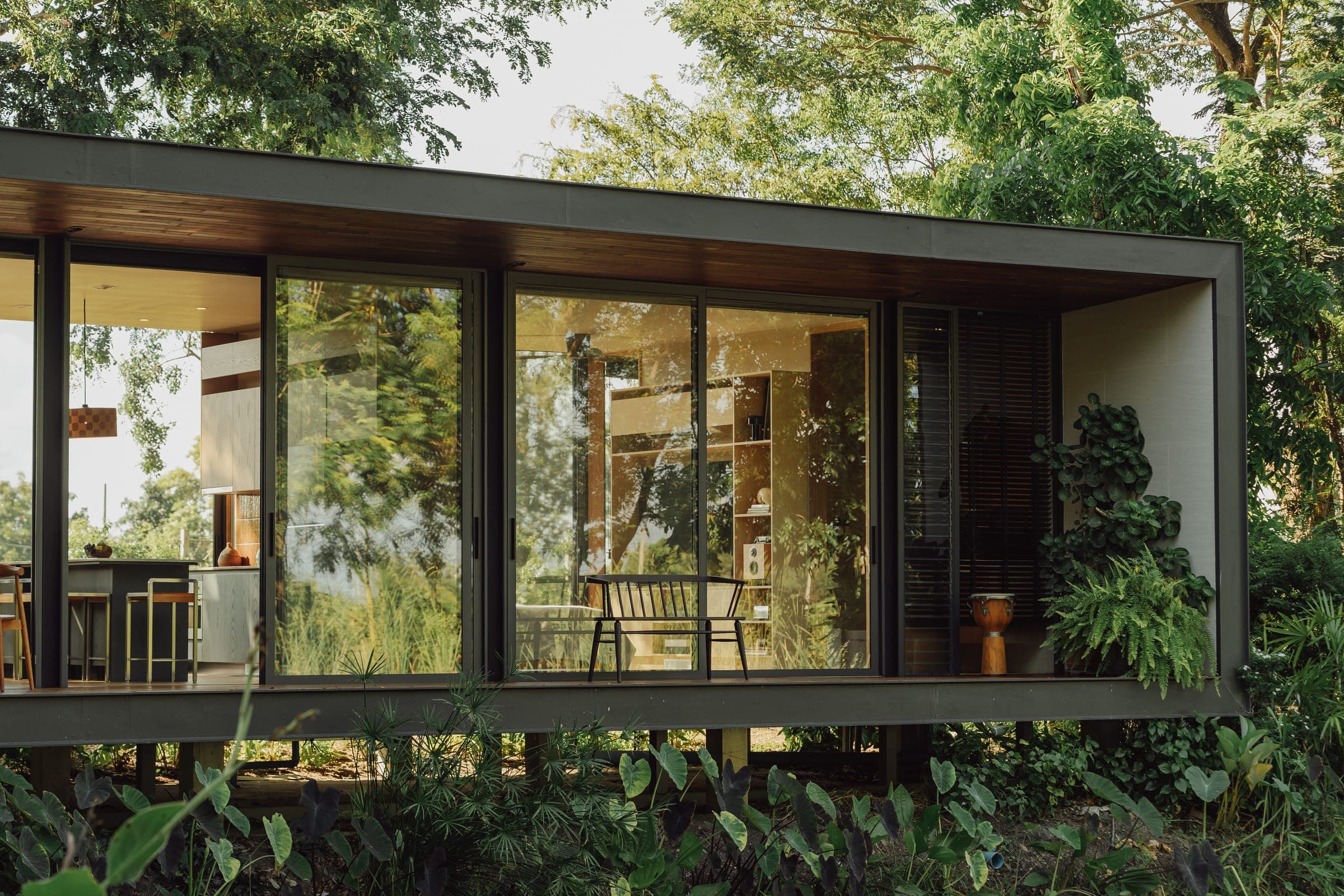
What site and logistics questions can reveal a reliable builder?
Reliable builders ask detailed questions about land access, soil, drainage, utility distance, and installation constraints before final pricing. In Thailand, the route to your land, seasonal rain, local road limits, and foundation readiness can materially affect schedule and cost, so serious builders assess these issues early.
Modular homes are not delivered into a vacuum. Builders should ask for land title context, survey information, access-road width, overhead wires, turning radius, crane standing area, and whether the site is flood-prone. They should also explain what happens if the foundation is delayed or not built to tolerance. These questions show whether the company understands installation reality rather than only factory production.
How do warranties, service, and track record affect the final decision?
Warranties and after-sales support matter because modular defects often appear at interfaces: joints, finishes, waterproofing, and services. Choose a Thailand builder with documented handover procedures, a realistic defect process, and evidence of completed projects or client references. A shorter warranty with clear service can outperform a vague long promise.
Ask for sample warranty language, response times, and who handles defects after handover. If the builder outsources major parts of the process, clarify who is accountable when issues overlap between factory work and on-site work. References, completed homes, and consistent documentation usually tell you more than marketing claims. Look for proof of process, not just attractive photos or social posts.
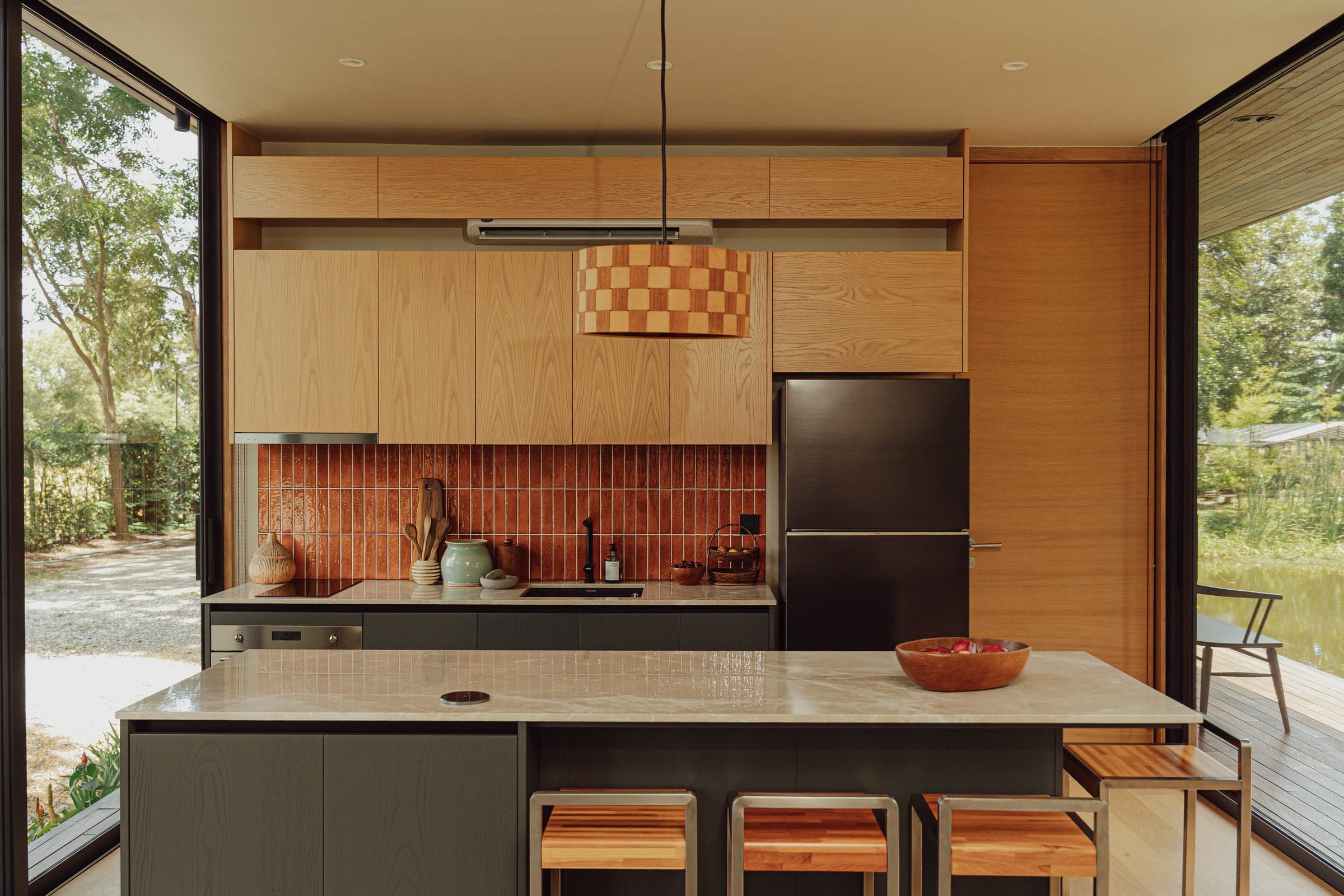
How does INK answer these questions?
INK builds every home in-house: structural modules are fabricated in its own workshop and assembled on site by the same team that completes the joinery and finishing. Sati prices are published, with a fixed specification, and INK takes on a maximum of three homes per quarter so each project keeps the team's full attention.
- Who builds it — one INK team, from foundation to final fitting. There is no handover between a factory and a separate installer.
- What the price covers — Sati M from ฿2,900,000 and Sati L from ฿4,100,000, excluding VAT, including air conditioning, built-in furniture in every room, kitchen appliances and sanitary ware. See what a modular home costs.
- What it is made of — a steel beam structure on a concrete foundation, Euro-standard aluminium frames and 3+3 mm UV-protected laminated glass.
- How long it takes — within four months from contract, for both Sati M and Sati L.
- Where to see the work — completed homes in Khao Kho and Phuket, both on sloping ground.
Use the same checklist for every builder you speak to, INK included. A builder who welcomes these questions in writing is usually the one who will still answer the phone after handover.
Key takeaways
- Compare complete project scope, not just the factory unit price or advertised model.
- Ask who handles engineering, permits, foundations, transport, installation, and utility connections.
- Inspect factory quality controls, material specifications, and pre-delivery inspection steps.
- Use a written comparison checklist for exclusions, warranties, timeline assumptions, and variation rules.
- A reliable Thailand builder asks detailed site-access and drainage questions before final pricing.
Frequently asked questions
Is the cheapest modular home builder in Thailand usually the best value?
Usually not. The cheapest quote often omits site works, transport, crane use, permit assistance, utility connections, or interior items. Value comes from a builder whose engineering, scope, contract terms, and after-sales process are clear enough to reduce costly variations, delays, and defect disputes later.
Should a modular builder in Thailand handle permits for me?
A builder should at least explain the permit pathway, provide the required drawings and specifications, and identify what must be coordinated with local authorities or licensed professionals. Full permit handling varies by project and location, but vague answers about approvals are a warning sign during builder selection.
What documents should I request before signing with a modular home builder?
Request a detailed proposal, scope of works, drawing list, material specifications, payment schedule, warranty terms, exclusions, variation process, and an indicative timeline. If available, ask for sample contracts, sample handover checklists, and references from completed projects in Thailand with similar site conditions.
How important is visiting the builder's factory or completed projects?
It is very important because photos and renders can hide workmanship issues. A factory or completed-home visit helps you inspect finish consistency, waterproofing details, tolerances, and how modules are assembled. It also shows whether the builder has an organized process rather than a purely sales-driven presentation.
This guide is general information for comparing builders and does not replace legal, engineering or permit advice for a specific site. INK Homes is a modular home builder, and the section on INK describes its own published specification. Drafted with AI assistance and reviewed against INK's published information. Published by INK Homes.