
Do you need a building permit for a modular home in Thailand?
Yes. In Thailand, a modular home usually needs a building permit when it is installed on land as a residence. Authorities typically assess the finished building’s use, footprint, height, utilities, and permanence rather than whether it was factory-built, so local approval is commonly required before installation.
Yes, a modular home in Thailand will usually need a building permit if it is placed on land as a dwelling. In practice, Thai authorities generally look at the building’s use, footprint, height, utility connections, and site conditions rather than whether the home arrived in modules from a factory. Building in modules does not usually create an automatic exemption from local approval.
The authority may be a เทศบาล municipality, อบต. Subdistrict Administrative Organisation (SAO), district office, or the Bangkok Metropolitan Administration, depending on the land location. Land title, zoning, setbacks, drainage, septic arrangements, and road access can all affect the result. For that reason, buyers should confirm permit requirements before transport, craning, and final installation begin.
Does a modular home count as a building under Thai permit rules?
Usually yes. If a modular home is assembled or installed on land for residential use in Thailand, local authorities commonly treat it as a building that may need approval. The main issue is the installed structure’s function, permanence, and site impact, not whether the home was manufactured off-site in modules.
In normal Thai practice, permit review focuses on what exists on the site after installation: a residence with occupation, structure, utilities, circulation, and safety implications. A module built in a factory may reduce on-site construction time, but once it becomes a house on land, the project often follows the same approval logic as a conventional dwelling. Authorities such as DPT, local municipalities, and BMA offices usually assess the completed building condition.
- Factory fabrication does not automatically remove permit duties.
- Residential use matters more than the manufacturing method.
- Foundations and utility connections usually increase permit likelihood.
Which law sets the permit rules?
The Building Control Act B.E. 2522 governs construction in the areas where it applies, and the local authority administers it. Ministerial regulations and local rules set details such as setbacks, height and drainage. A modular home is assessed as a building under the same framework as a conventionally built house of the same size and use.
Because the Act applies by area, rules differ between a Bangkok district, a provincial municipality and a rural subdistrict. Coastal zones, national park buffers and steep land may carry extra controls. Ask the local office which rules apply to your title deed before the design is finalised.
When is a building permit usually required for a modular home in Thailand?
A building permit is usually required when a modular home will serve as a permanent or semi-permanent residence, especially if it includes foundations, plumbing, electrical systems, septic works, terraces, or clear long-term attachment to the land. Local review commonly happens before placement, assembly, and occupation begin.
In most real projects, approval is expected when the modular home functions as a house rather than a movable object. Foundations, retaining walls, roofing links, wastewater systems, and electrical plans often trigger review because they affect safety, sanitation, and neighboring plots. Even if modules arrive largely complete, site works still matter. A municipality or SAO may also check setbacks, drainage, access roads, and fire clearance before permission is issued.
| Situation | Likely permit view | Why it matters |
|---|---|---|
| Permanent modular house on private land | Usually required | It functions as a dwelling with utilities and site works |
| Temporary site office or movable unit | May vary | Mobility and temporary use can affect treatment |
| Guesthouse or rental unit | Usually required | Occupancy and service connections raise compliance issues |
Are there exceptions or gray areas for temporary or movable modular units?
Yes, there are gray areas. Very small, movable, or clearly temporary units may be treated differently in some locations, but there is no broad nationwide exemption for modular structures. Thai authorities can still consider anchoring, utility connections, land use, duration of placement, and actual sleeping occupancy before deciding.
This is where many owners get confused. A unit described as movable, demountable, or temporary may still attract scrutiny if it remains on land for long periods, connects to septic or power, or is obviously used for living. Local officers may ask whether the structure is truly temporary or effectively a permanent home. Because practice can differ by district, written confirmation from the relevant authority is safer than relying on verbal advice alone.
Which authority issues the permit for a modular home in Thailand?
The permit is usually issued by the local authority governing the land, such as a municipality, SAO, district office, or the Bangkok Metropolitan Administration. The correct office depends on the site location, and officers may coordinate building control, drainage, sanitation, access, planning, and utility requirements before approving installation.
Thailand does not use a single national permit counter for every home. Instead, the competent office usually follows the project jurisdiction. In Bangkok, BMA procedures may apply. In other areas, a เทศบาล or อบต. may be the first stop, sometimes with district coordination where needed. For modular projects, owners should verify jurisdiction early because transport logistics, crane access, drainage works, and utility approvals can all affect drawings and timing.
- Bangkok sites often route through BMA offices.
- Provincial urban sites may fall under a municipality.
- Rural sites may be reviewed by a SAO or district-linked authority.
What documents are commonly needed for approval?
Most modular home permit applications in Thailand commonly require land ownership or use documents, a site plan, architectural and structural drawings, utility details, applicant identification, and signed forms required by the local office. Depending on scope, the authority may also request engineer or architect endorsements for the submission.
The exact package varies, but authorities usually want proof of land rights, a clear description of what will be built, and drawings showing where the home sits on the plot. For modular homes, that often means combining factory specifications with local site drawings. If there are foundations, drainage channels, septic tanks, retaining walls, decks, or covered terraces, those details should normally appear in the application set.
- Land title or lawful land-use evidence
- Site plan with setbacks, access, and orientation
- Architectural drawings and modular layout
- Structural or foundation information
- Plumbing, drainage, septic, and electrical details
- Signed applicant and professional documents where required
What should buyers do before ordering or installing a modular home in Thailand?
Before ordering, buyers should verify land status, confirm the correct local authority, ask whether a permit is needed for the exact design, and avoid transporting modules until the case has been reviewed. Early checks reduce redesign costs, delivery delays, crane issues, and the risk of non-compliant foundations or utilities.
A practical sequence helps. First confirm the land title and local jurisdiction. Next share the intended floor area, height, foundation type, and utility plan with the relevant office. Then align factory drawings with local submission requirements before fabrication is finalized. This matters because a modular home can be fast to produce but expensive to revise later. Early coordination with the authority, designer, engineer, and installer usually prevents avoidable delays.
What does INK need to plan a home on your land?
INK starts with your province, the type of project and what you know about the land: its size, slope, access road and existing utilities. Photos or a survey of the plot make the first conversation far more useful, because site conditions shape the foundation, the delivery route and the drawings a permit application needs.
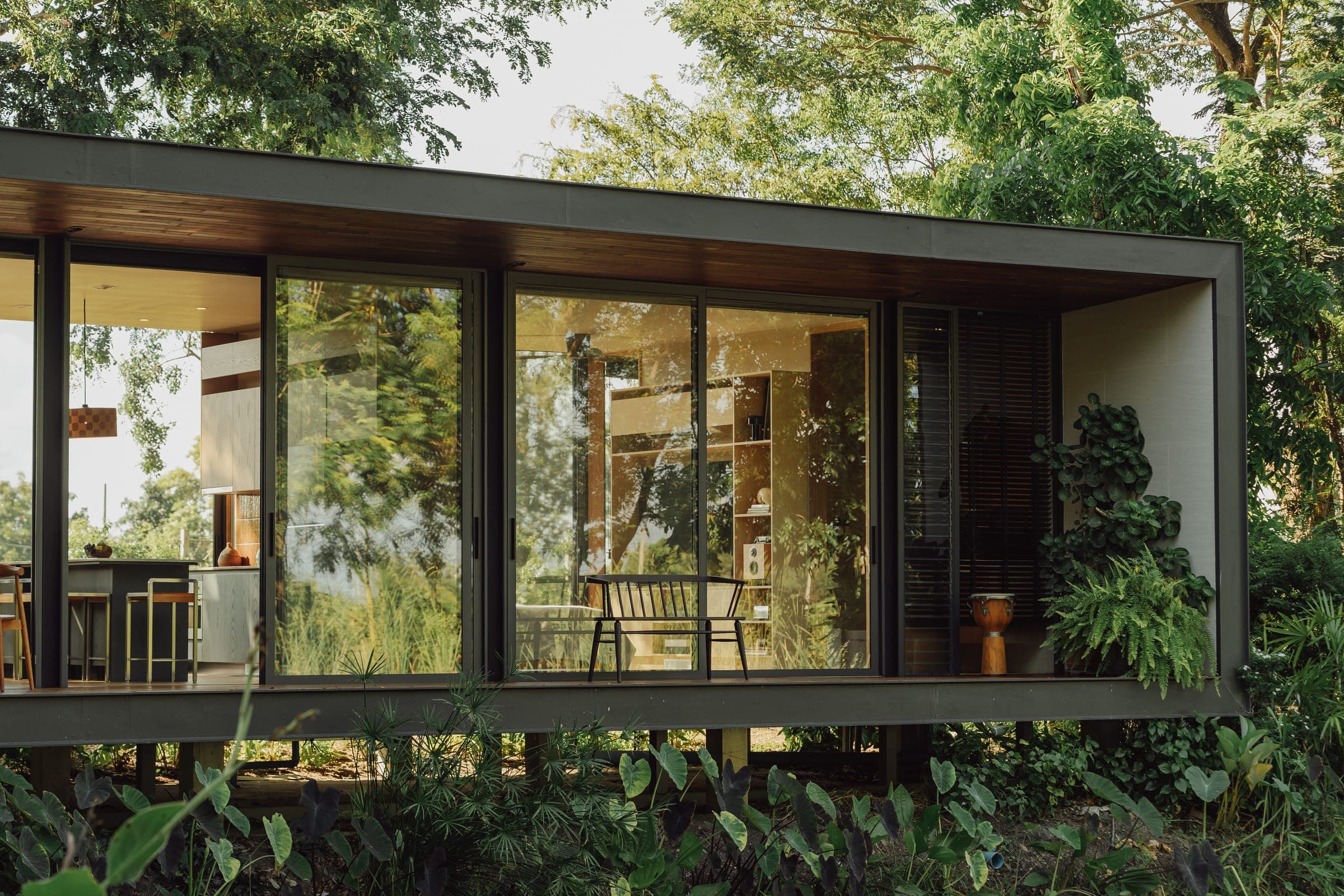
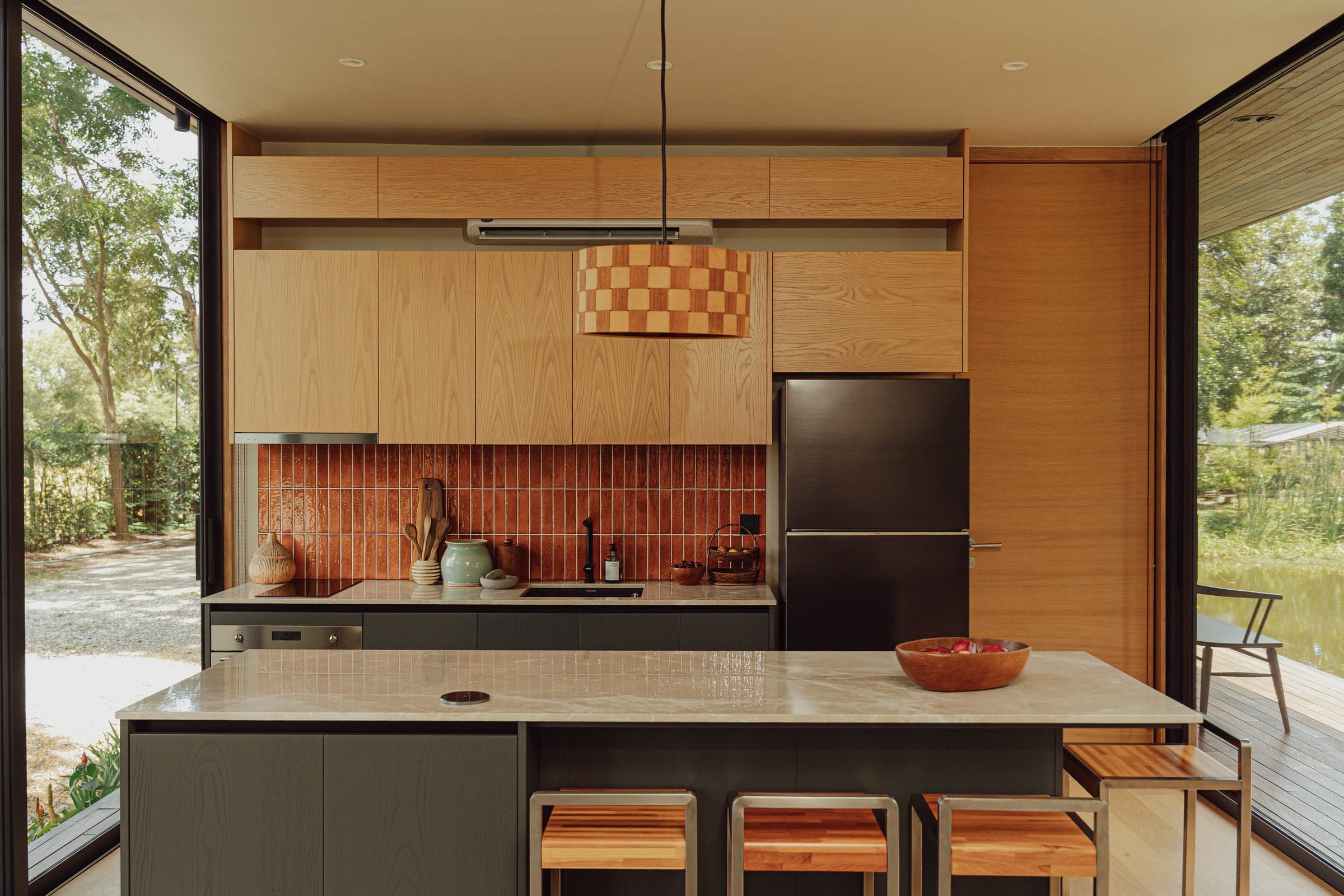
Each Sati home is a single-storey pavilion on a concrete foundation, so its footprint is fixed early: 12.50 × 6.35 m for Sati M and 17.50 × 6.35 m for Sati L. That makes it easier to check setbacks and siting with the local authority before fabrication begins. Talk to INK about your land.
Key takeaways
- A modular home in Thailand usually needs a building permit when used as a residence on land.
- Factory-built construction does not usually exempt a house from Thai local approval requirements.
- Permit review commonly depends on permanence, foundations, utilities, setbacks, and land jurisdiction.
- The competent authority may be BMA, a municipality, a SAO, or another local office.
- Buyers should confirm permit requirements before fabrication, transport, and on-site installation begin.
Frequently asked questions
Can a factory-built home avoid a permit just because it is modular?
Usually no. In Thailand, a home does not normally avoid permit review simply because it was factory-built. Local authorities generally look at the installed result on the land, including residential use, permanence, utility connections, foundations, and site works, rather than the manufacturing method alone.
Do small modular homes or tiny houses in Thailand still need approval?
Often yes, although treatment can vary by location and use. A small modular or tiny house may still need approval if it is placed on land for living, connected to utilities, or kept there long term. Size alone does not guarantee exemption under local building control practice.
Who should I ask first about a modular home permit in Thailand?
Start with the local authority responsible for the land location, such as the Bangkok Metropolitan Administration, a municipality, or a SAO. Ask about the exact design, footprint, height, foundation, and utilities. Getting written guidance early is safer than relying on informal verbal advice.
What happens if modules are delivered before permit issues are clarified?
That can create avoidable cost and delay. If the authority requires changes to setbacks, foundations, drainage, septic design, or structural details after fabrication, the owner may face redesign, transport rescheduling, crane complications, or non-compliant installation work that must be corrected before occupation.
This guide is general information about building permits in Thailand and is not legal advice. Requirements vary by site, authority and project, so confirm current rules with the local office and qualified Thai professionals. Drafted with AI assistance and reviewed against INK's published information. Published by INK Homes.