
How do you build a second home in Thailand as a non-resident?
Yes, a non-resident can build a second home in Thailand, but usually not by owning the land outright. The practical route is a registered lease, usufruct or superficies over the land. Confirm permits and zoning early, then manage contracts, taxes and build supervision carefully.

A non-resident can build a second home in Thailand, but the central constraint is land ownership. In most cases, foreigners cannot directly own land, so the project must be structured around a lawful right to use land, such as a registered lease, usufruct, or superficies, while the house itself, contracts, permits, and payments are handled with careful local verification.
| Route | What you may control | Typical use case | Main caution |
|---|---|---|---|
| Registered lease | Right to occupy land for the lease term | Second home with predictable timeline | Renewal language does not guarantee future re-registration |
| Superficies | Right to own structures on another person's land | Building a house on leased or family-held land | Must be properly registered at the Land Office |
| Usufruct | Right to possess and use land | Long-stay personal use | Less suitable when financing or resale flexibility is important |
| Thai company or promoted structure | Indirect project vehicle in limited cases | Commercial or structured investment contexts | Requires specialist legal and tax advice |
Can a non-resident legally build a second home in Thailand?
Yes, a non-resident can legally build a second home in Thailand if the project is built on land they are entitled to use under Thai law. The main issue is not construction itself, but lawful land control, permit eligibility, and contract structure. Most projects rely on leases or registered real-right arrangements rather than direct land ownership.
Thai law generally restricts direct foreign ownership of land, but it does not prohibit a foreign individual from commissioning and owning a house structure in appropriate circumstances. In practice, buyers often use a registered lease combined with a right of superficies so the land and house are treated distinctly at the Land Office. This distinction matters for inheritance planning, occupancy rights, and future transfer discussions with local counsel and the Department of Lands.
Before design begins, confirm the title type, access road status, utility availability, and zoning constraints with the seller, surveyor, and district office. Land with weak access rights or unclear boundaries can derail a build even when the purchase price looks attractive. Early checks with the Department of Lands and Department of Public Works and Town & Country Planning reduce avoidable legal and engineering risk.
What legal structure is usually safest for land control?
For many non-residents, the most practical structure is a registered land lease paired with a registered superficies, because it separates land use from house ownership. The safest option depends on family circumstances, tax residence, financing, and exit plans, so Thai legal review is essential before any deposit or design contract is signed.
A lease can provide defined occupancy rights for a fixed term, while a superficies can establish the right to own the building on someone else's land. Some buyers also consider a usufruct for long-term personal use, especially when resale is not the priority. Each route affects succession, transferability, and negotiating leverage differently, so contract language should be tailored rather than copied from generic templates used in resort areas or forum discussions.
Structures involving a Thai company are more sensitive and should only be evaluated with specialist counsel because nominee arrangements can create serious compliance issues. If the project has investment or operating elements, advice may also touch the Thailand Board of Investment and tax treatment under the Revenue Department. A lawful paper structure is only useful if it matches real control, payment flows, and intended use.

Which due diligence checks should happen before paying a deposit?
Before paying a deposit, verify title, encumbrances, boundary accuracy, road access, zoning, utility capacity, flood exposure, and permit feasibility. A non-resident should also confirm who can sign, whether the chosen land-right structure can be registered, and whether staged payments can be tied to documentary milestones rather than verbal promises.
Request a current title document, cadastral map, seller identification, and evidence that the person signing has legal authority. Have a qualified surveyor check boundaries on the ground against title records, especially where fences, roads, or neighboring structures appear inconsistent. In coastal, hillside, or rural areas, topography, fill history, and drainage behavior can affect foundation cost materially.
Ask the local authority whether the intended house size, height, setbacks, wastewater system, and driveway arrangement are likely to satisfy local requirements before any deposit becomes non-refundable. A practical diligence file should also include utility connection expectations, soil information, and flood history. Currency planning matters too, so keep a record of every international transfer and what it paid for.
What permits and approvals are needed to build?
Most house projects in Thailand require local building approval, compliant plans, and supporting documents tied to the land-right holder or authorized applicant. Exact requirements vary by district and project type, so non-residents should treat permits as a local process, verified directly with the municipality or district office before construction contracts are finalized.
Permit packages commonly include architectural drawings, structural drawings, site plans, engineer and architect endorsements, identification documents, and evidence of the right to use the land. Depending on location, there may also be requirements affecting drainage, retaining walls, septic systems, or environmental controls. The district office or municipality applies the local rules, so assumptions from Phuket, Chiang Mai, or Bangkok should not be transplanted automatically to another province.
If the design changes materially after approval, amendments may be required, which can affect schedule and contractor sequencing. That is why design freeze discipline matters before procurement begins. The most reliable source is the local authority informed by national planning guidance from the Department of Public Works and Town & Country Planning, not informal comments from brokers or neighboring landowners.
How should a non-resident structure the build contract and payments?
A non-resident should use a written construction contract with scope, specifications, drawings, milestone payments, retention, delay provisions, defect obligations, and change-order rules. Payments should follow verified progress and documentary evidence, not calendar dates alone. This reduces remote-management risk and helps align the builder, designer, engineer, and owner around measurable deliverables.
The contract should attach the approved drawings, materials schedule, inclusions and exclusions list, completion timeline, and handover standard. Milestones are stronger when linked to inspected work stages such as foundations, structure, roof watertightness, MEP rough-in, finishes, and final snag completion. Many owners also hold a retention amount until defects identified at handover are corrected, rather than releasing 100 percent on practical completion day.
For non-residents managing from abroad, reporting cadence is critical. Require dated site photos, progress certificates, variation logs, procurement records, and approval sign-offs before each transfer. If imported components are involved, clarify currency risk, customs timing, and substitutions. A disciplined paper trail can matter as much as design quality when a dispute arises over delays, material changes, or workmanship discovered after seasonal rain begins.
How does building with one team help an owner abroad?
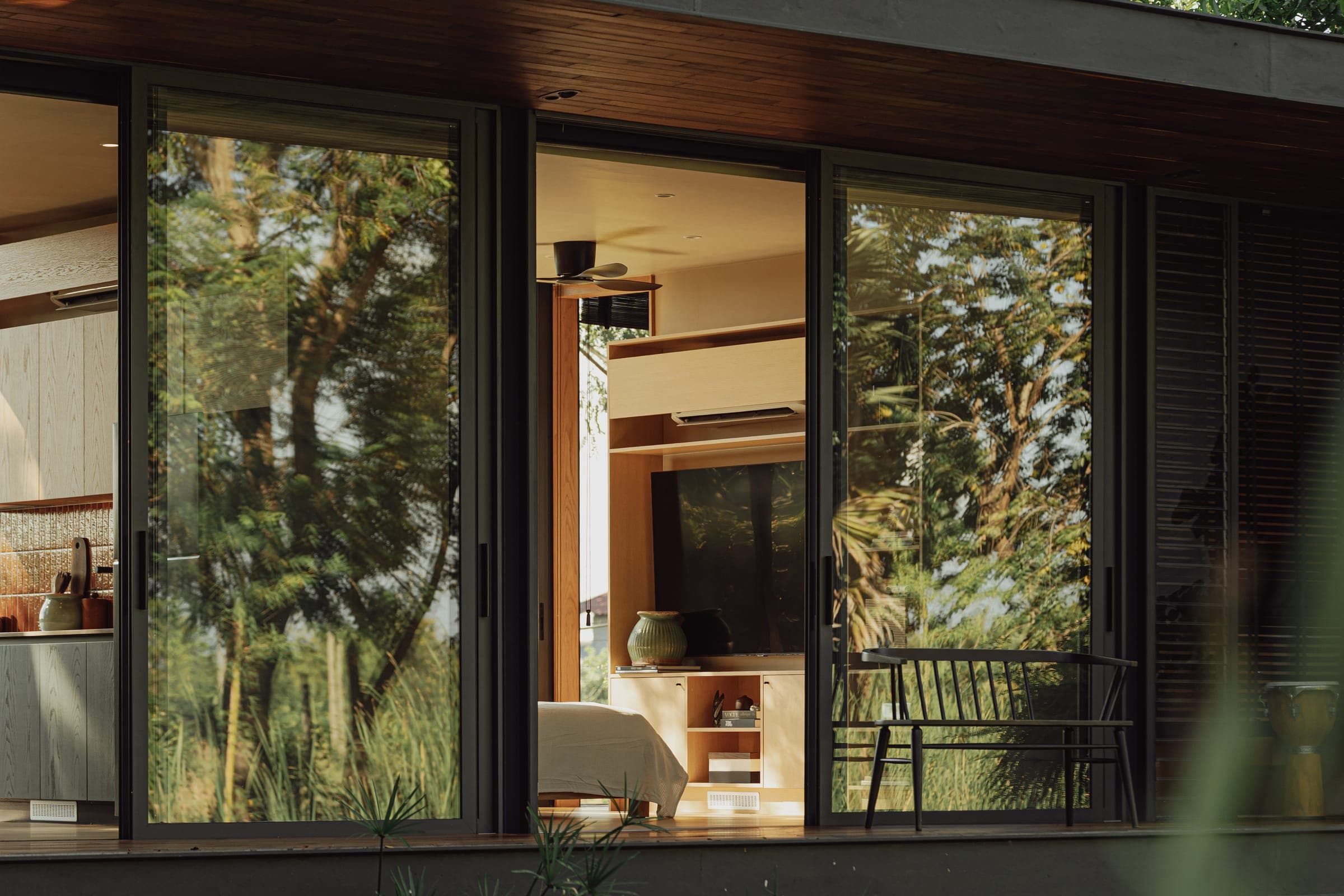
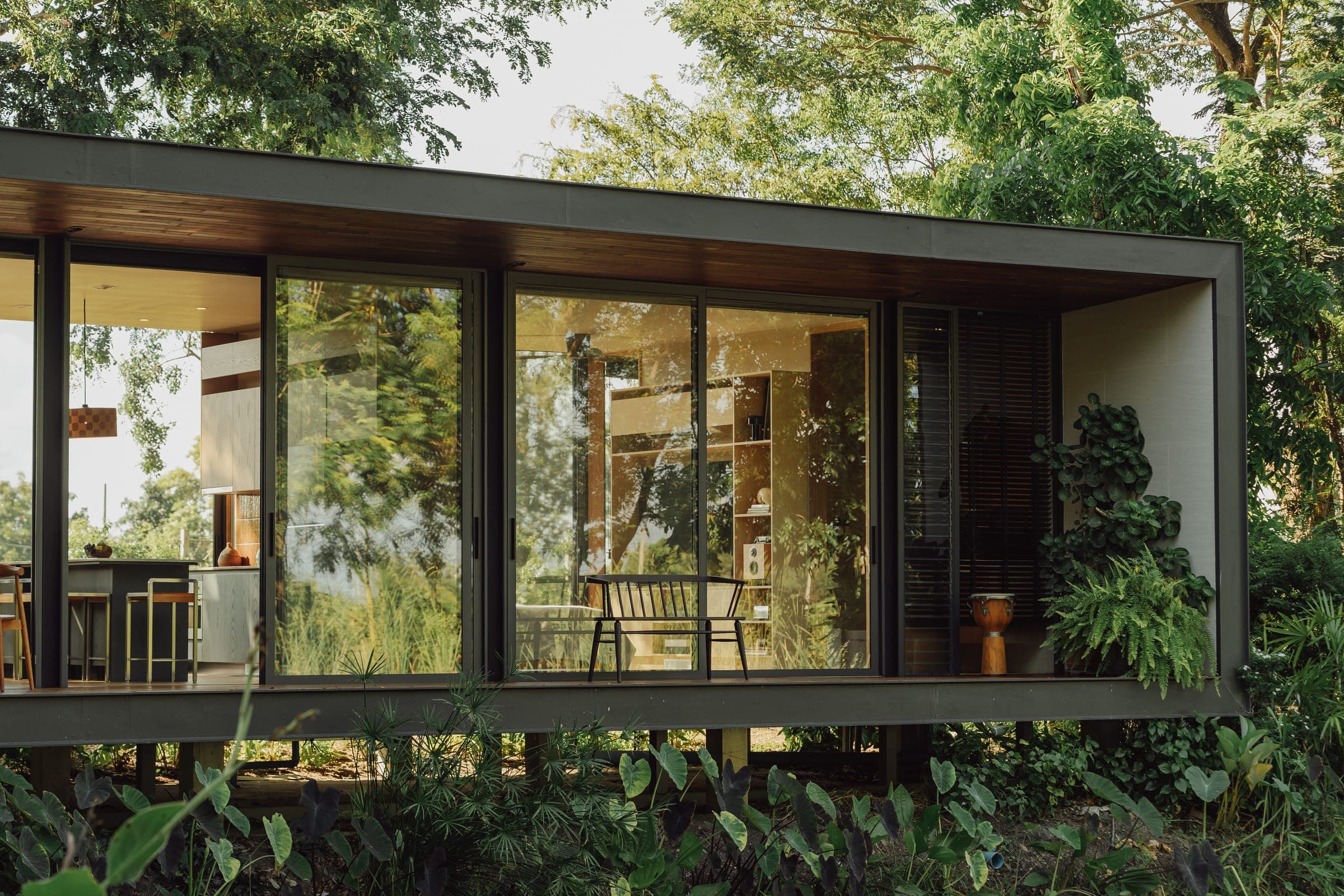
When one team is responsible for structure, joinery and finishing, an owner abroad has one point of contact and no gaps between contractors. INK builds every home in-house, fabricating modules in its own workshop, and completes a Sati home within four months from contract, so fewer site visits are needed.
A fixed specification also reduces the decisions you need to make remotely. A Sati home arrives fitted with air conditioning, built-in furniture in every room, kitchen appliances and sanitary ware, so there is no separate fit-out contract to manage after the structure is finished. See how INK builds.
The land arrangement still comes first. Read whether foreigners can build a house in Thailand for the legal routes, then share your province and plot details with INK.

What taxes, banking, and ownership records should you plan for?
Non-residents should plan for taxes, transfer costs, banking records, and evidence of inbound funds before land-right registration and construction payments begin. The exact tax outcome depends on the legal structure and personal tax status, but organized records are essential for compliance, future resale, inheritance planning, and demonstrating the source and purpose of transferred money.
The tax profile can involve registration fees, stamp duty, withholding tax, or specific business tax depending on the transaction and seller status. Construction payments may also have VAT implications depending on the contractor and invoicing method. Because rules and interpretations can change, written advice from a Thai lawyer and tax adviser is preferable to relying on forum summaries. The Revenue Department remains the primary reference for tax administration.
Keep contracts, receipts, transfer slips, land-office records, and permit documents in one indexed file. If you later refinance, sell, or pass the property to heirs, missing paperwork can slow everything down. Some buyers also maintain build-cost schedules in both Thai baht and home-currency terms to track exchange-rate impact over time, especially when large transfers are split across multiple progress stages.
What mistakes most often derail second-home projects in Thailand?
The most common failures are assuming land ownership rules are flexible, skipping title and access checks, under-specifying the contract, paying too much upfront, and relying on verbal assurances about permits or utilities. Non-residents reduce risk by verifying documents independently, staging payments tightly, and matching the legal structure to realistic use and exit plans.
Projects often go wrong before construction starts. Buyers fall in love with a view lot, pay a reservation amount, then discover the access road is informal, the retaining wall budget was underestimated, or the chosen rights cannot be registered as expected. Another frequent problem is starting with concept drawings that do not reflect local permit conditions, causing redesign, delay, and contractor repricing after expectations have already hardened.
Remote ownership adds friction because small unanswered questions compound over months. Unapproved substitutions, drainage shortcuts, and incomplete snagging can remain invisible until occupancy. A stronger process uses independent legal review, a buildable site survey, permit confirmation, milestone inspections, and a decision log. Those controls are less glamorous than finishes, but they usually matter more to long-term value, enjoyment, and dispute prevention.
Key takeaways
- Non-residents can build in Thailand, but usually need a lawful land-use structure rather than direct land ownership.
- A registered lease plus superficies is a common route when the goal is stable use and house ownership clarity.
- Title, boundaries, road access, zoning, utilities, and flood risk should be verified before any non-refundable deposit.
- Construction contracts should tie payments to inspected milestones, documents, and retention rather than dates alone.
- Tax records, permit files, and inbound fund documentation matter for compliance, resale, and inheritance planning.
Frequently asked questions
Can a foreigner own the house but not the land in Thailand?
Yes, that can be possible when the legal structure is documented and registered correctly, often through arrangements such as a lease and superficies. The key point is separating rights to the land from rights to the building, then ensuring contracts, permits, and Land Office records support that distinction clearly.
Is leasing land in Thailand enough to build a second home safely?
A lease can be workable, but by itself it may not address every issue involving house ownership, transfer rights, inheritance, or financing. Many non-residents ask counsel whether a lease should be combined with superficies or another registered right, based on project goals, family circumstances, and expected holding period.
Do non-residents need to be in Thailand during construction?
Not continuously, but they do need reliable local oversight, document control, and milestone verification. Remote builds are safer when the owner has a clear contract, frequent reporting, independent inspections, approval rules for variations, and one accountable point of contact coordinating design, permits, procurement, and site execution.
Can a Thai company be used to hold the land for a second home?
Sometimes a company structure is discussed, but it is not a casual workaround and should never rely on nominee arrangements. Whether a company is appropriate depends on real business substance, compliance, tax treatment, and intended use, so specialist Thai legal advice is essential before taking that route.
This guide is general information, not legal, tax or investment advice. Thai property rules, permit practice and tax outcomes vary by structure and location, so consult a licensed Thai lawyer and tax adviser before paying a deposit or signing a lease. Drafted with AI assistance and reviewed against INK's published information. Published by INK Homes.