
How do you build a second home in Thailand?
A second home in Thailand starts with the right location and land, then a builder who can deliver from a distance. Most owners are Thai families looking for a weekend or holiday place outside the city. INK Homes builds fully fitted Sati second homes from ฿2.9 million excluding VAT, within four months.
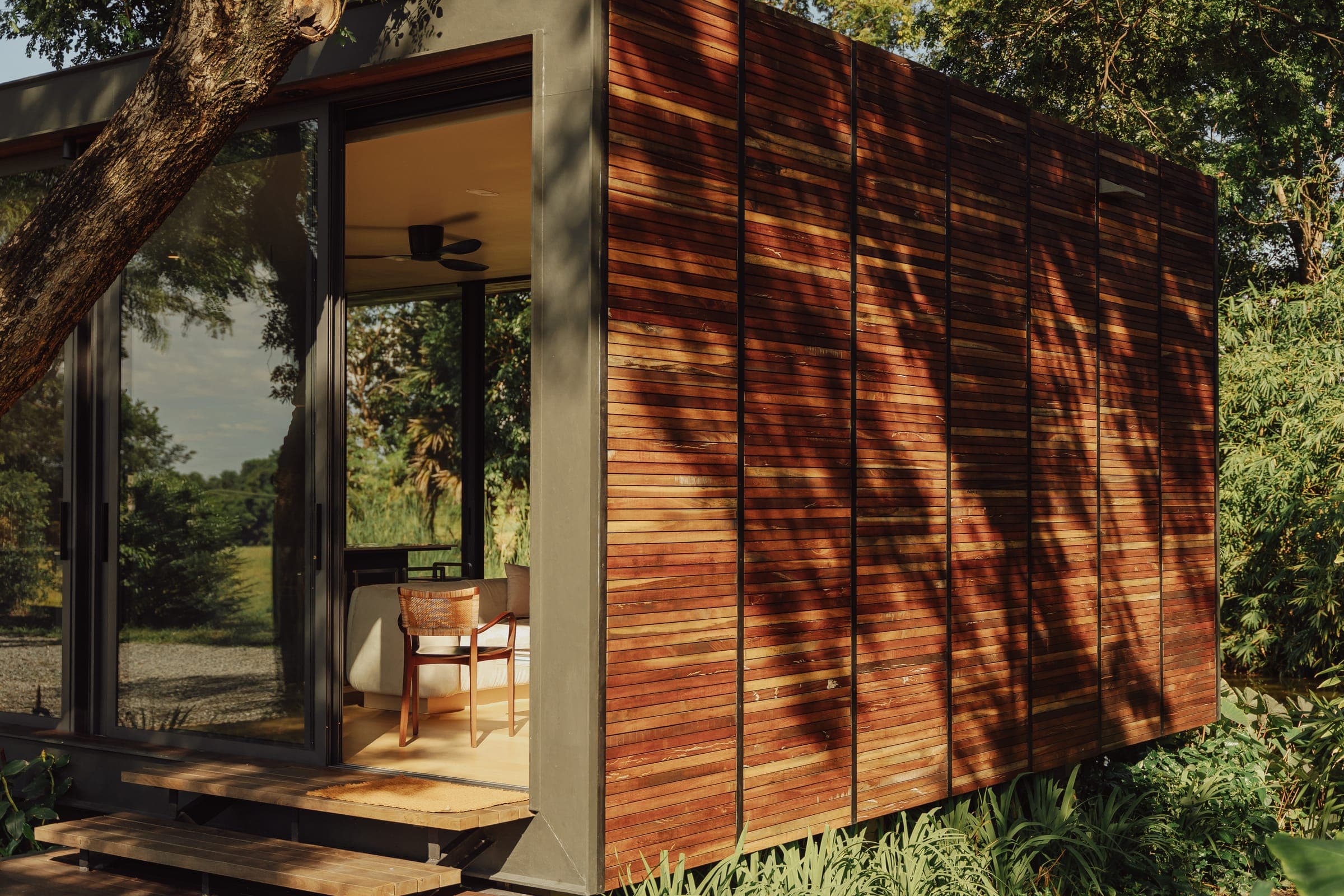
A second home in Thailand is usually a place to slow down: a weekend house a few hours from Bangkok, a family home in the hills, or a coastal retreat for longer holidays. Building one well comes down to three decisions: where, on what land, and with which builder.
This guide is written for Thai owners first, since most second homes here are built by Thai families. Foreign owners will find the main legal points in their own section below.
Why build a second home rather than buy one?
Building a second home lets you choose the land and the view, then put a home on it that suits how you will use it. Ready-built holiday houses in places like Khao Yai or Hua Hin are often in estates with shared rules. Building on your own plot gives more privacy and control.
Building no longer has to mean a year of managing contractors. INK Homes builds its Sati homes entirely in-house, with structural modules made in its workshop and assembled on your land by the same team. Both the Sati M and the Sati L are completed within four months from contract.
Where do people build second homes in Thailand?
Popular second-home areas are within a few hours of Bangkok or a short flight away. Khao Yai and Hua Hin suit weekend use from Bangkok. Chiang Mai and Khao Kho offer cooler highland air. Phuket and the islands suit longer coastal stays. Choose by how often you will actually travel there.
- Highlands — Khao Kho, Khao Yai, Chiang Mai: cooler nights, mist and forest views.
- Coast — Phuket, Hua Hin and the islands: sea views, salt air and stronger sun.
- Near a family base — many Thai owners build on family land in their home province.
INK has completed second homes in Khao Kho, at 1,200 metres in pine forest, and in Phuket, on a hillside overlooking the Andaman Sea.
What should you check about the land for a second home?
Check the title deed, the legal road access, the slope, and how far the plot is from electricity and water before you commit. A Chanote title gives the clearest rights. Agricultural reform land and some other title types restrict what you can build, so confirm the use with the local land office.
Title records sit with the Department of Lands. On rural plots, ask the Provincial Electricity Authority about connection distance, and plan water from the Provincial Waterworks Authority or a well. Our guide to building on your own land has a full checklist.
How much does a second home in Thailand cost?
A fully fitted INK Sati second home starts from ฿2,900,000 for the 79 m² Sati M and ฿4,100,000 for the 113 m² Sati L, excluding VAT. On top of the house, budget for the land, 7% VAT, any transfer fees if you are buying the plot, and site work such as access and utility connections.
| Sati M | Sati L | |
|---|---|---|
| Area | 79 m² | 113 m² |
| Dimensions | 12.50 × 6.35 m | 17.50 × 6.35 m |
| Bedrooms / bathrooms | 1 / 1 + guest toilet | 2 / 2 + guest toilet |
| Starting price (excl. VAT) | ฿2,900,000 | ฿4,100,000 |
| Build time from contract | Within 4 months | Within 4 months |
If you plan to borrow, check current Bank of Thailand loan-to-value rules with your bank, as second mortgages can need a larger down payment. VAT is levied by the Revenue Department.
Which size suits a second home: Sati M or Sati L?
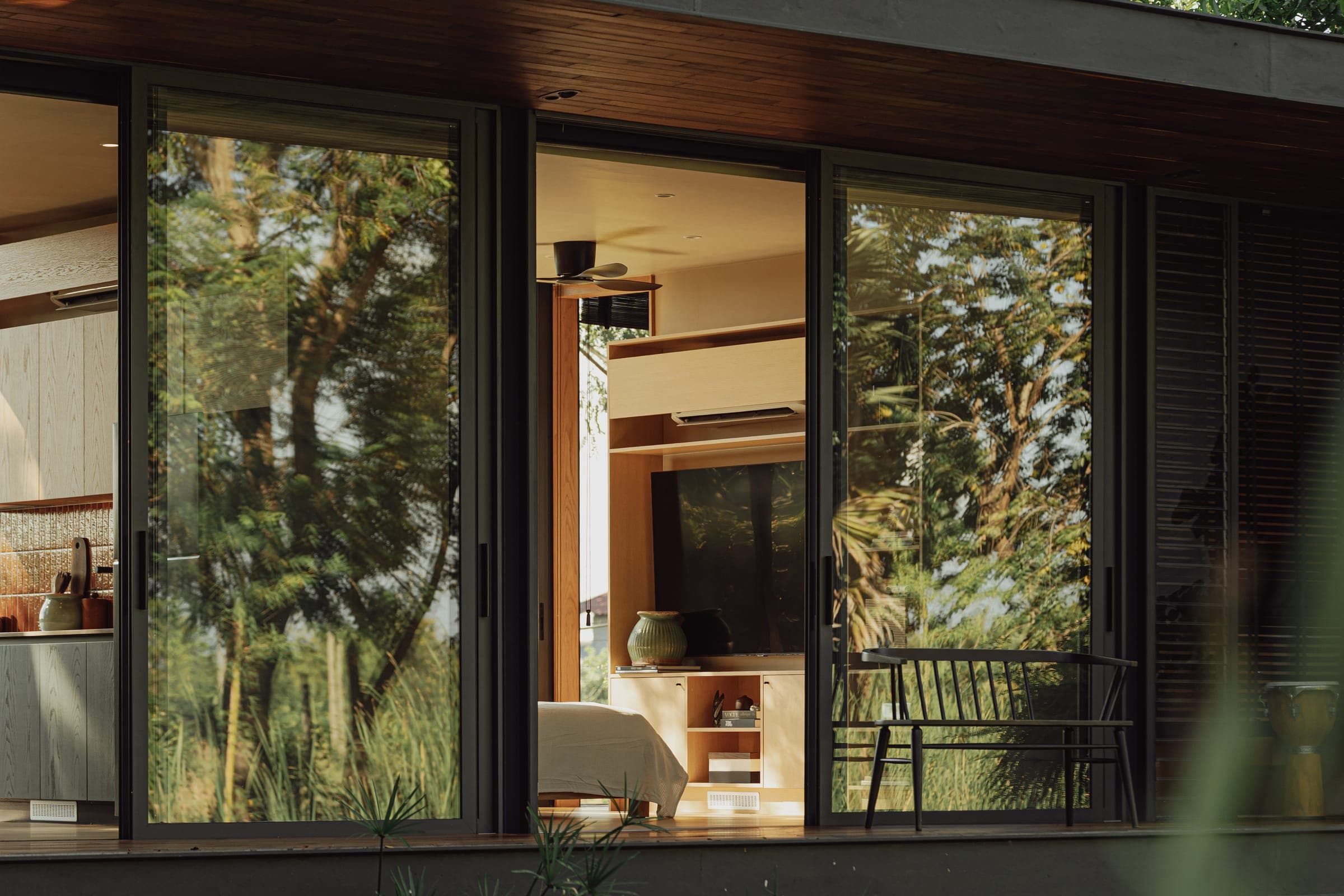
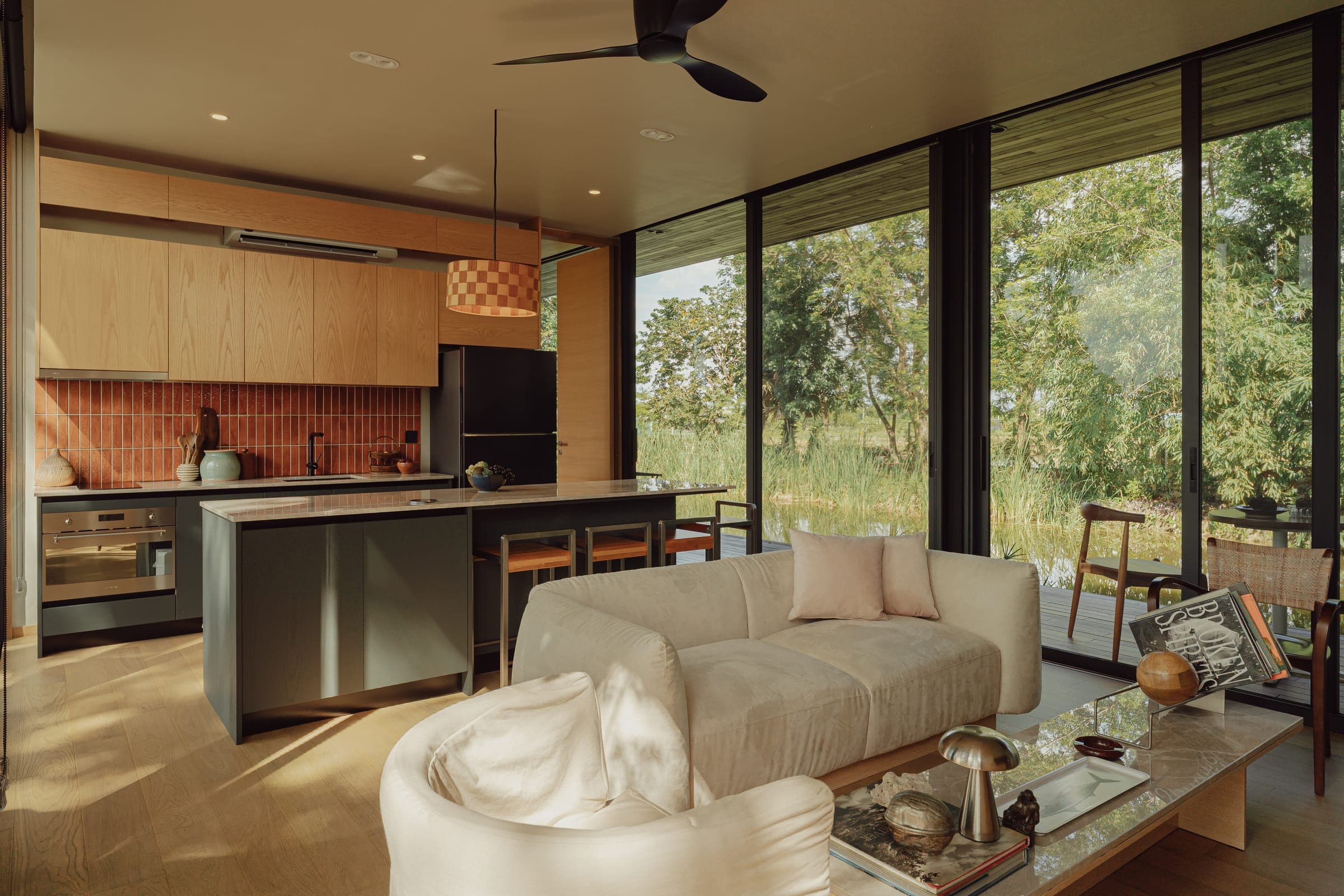
Sati M suits a couple or a single household who visit for weekends and want exactly enough space: one bedroom, a walk-in closet and open living to a terrace. Sati L suits families or frequent guests, adding a second bedroom, a second bathroom and a storage room for linens and equipment between visits.
Both share the same 2.80 m ceiling, materials and fitted furniture. The difference is space, not standard. See both on the Sati collection page.
Can foreigners build a second home in Thailand?
Foreigners can own a house in Thailand but generally cannot own the land under it. Common routes are a registered lease of up to 30 years, a superficies or usufruct, or building on land owned by a Thai spouse. Take advice from a licensed Thai lawyer before you commit to any land.
Our guides on whether foreigners can build a house in Thailand and building as a non-resident cover the options in detail.
How do you manage a second home build from a distance?
Manage a second home build from a distance by choosing a builder that handles every stage itself, agreeing a clear specification and price before work starts, and planning your site visits around key decisions. Fewer contractors means fewer handovers to supervise, which is where long-distance builds usually go wrong.
With INK, one team carries your home from foundation to final fitting, and the home is handed over fully fitted, so there is no separate furniture or kitchen contract to manage afterwards. Tell INK about your land to start.
Key takeaways
- Choose the second-home location by how often you will really travel there.
- Check title, road access, slope and utility distance before committing to land.
- A fully fitted Sati second home starts from ฿2,900,000 excluding VAT.
- Sati M suits couples and weekend use; Sati L suits families and frequent guests.
- Foreign owners usually lease the land and own the house; take Thai legal advice first.
Frequently asked questions
What is the best size for a second home in Thailand?
It depends on who will stay. A couple who visit for weekends is usually well served by a 79 m² Sati M with one bedroom and a walk-in closet. Families or owners who host guests often prefer the 113 m² Sati L, which adds a second bedroom, a second bathroom and storage.
Can I build a second home on my family's land?
Often, yes. Many Thai owners build on land held by their family in their home province. Check that the title type allows a house, that there is legal road access, and who will own the house. If the land is in a relative's name, agree the arrangement in writing before you build.
How long does it take to build a second home with INK?
Both the Sati M and the Sati L are completed within four months from contract. Allow additional time before the contract for land checks and the building permit from your local authority, which varies by province and by the paperwork for your plot.
Is a second home in Thailand worth it?
For many families, the value is in use rather than resale: a place to rest, gather and spend holidays without hotel bookings. It works best when the location is close enough to visit often, the home is easy to look after when empty, and the build cost is clear before you start.
This guide is general information and does not replace legal, engineering or permit advice; confirm local requirements with your local authority. Facts about INK and Sati come from the Sati catalogue and INK's project pages. Drafted with AI assistance and reviewed against INK's published information. Published by INK Homes.