
How do you build a house on your own land in Thailand?
You can build a house on your own land in Thailand if the title allows it, the plot has legal road access and utilities, and your local authority grants a building permit. Check the land first, then the design and permit. INK Homes builds fully fitted Sati homes on owners' land within four months.
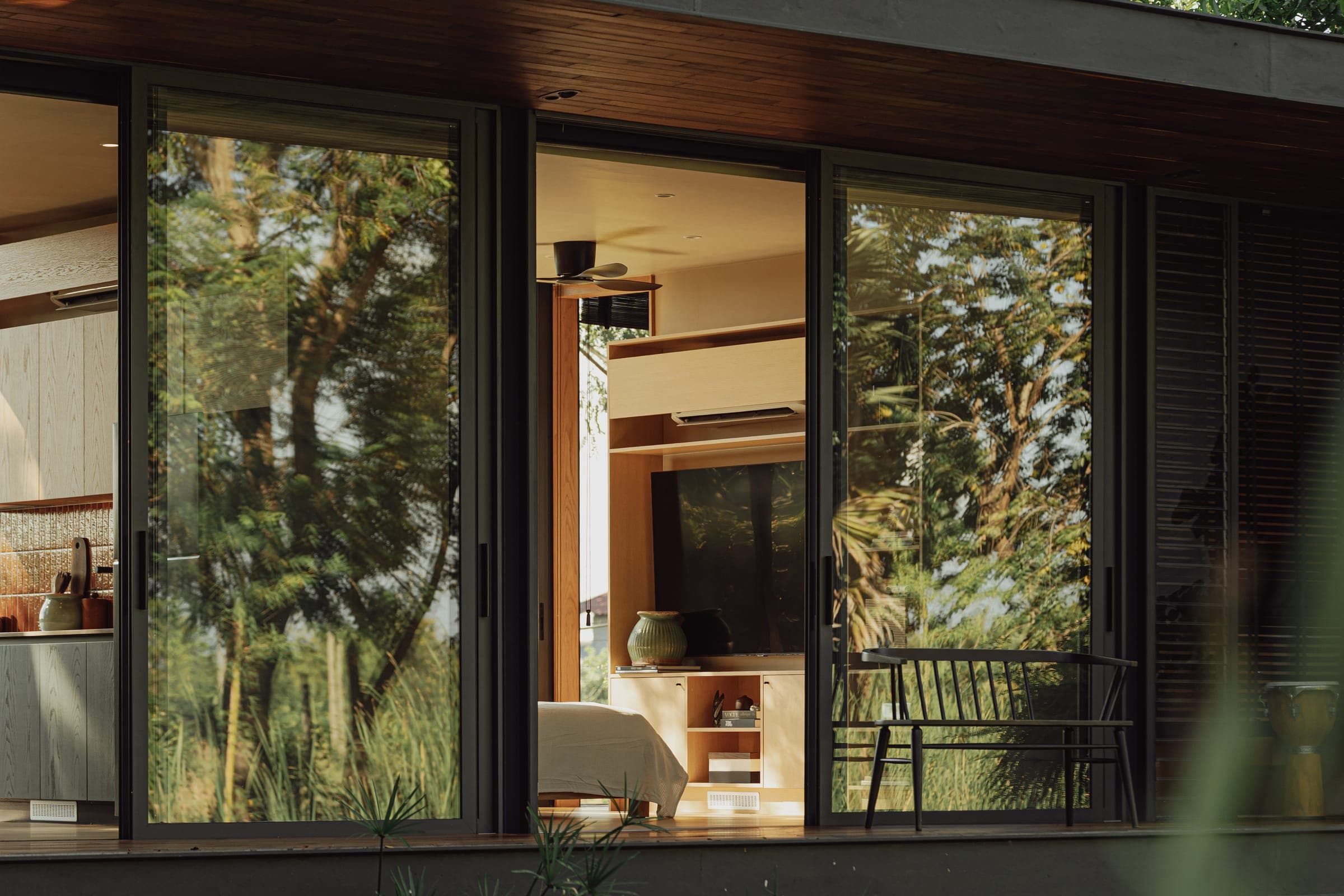
Building on your own land in Thailand works when four things line up: a title deed that allows a house, legal access for vehicles, a way to connect electricity and water, and a building permit from your local authority. Get those right first, and the build itself is the simpler part.
Many Thai families already own land in their home province or bought a plot years ago. This guide walks through the steps from title deed to handover.
What do you need to check before building on your own land?
Before building on your own land, check the title deed type, the boundaries, legal road access, the slope and drainage, and the distance to electricity and water. Also check zoning and any local rules on setbacks or height. These checks decide whether a house is possible and what the site work will cost.
- Title deed — the Department of Lands holds records; a Chanote (Nor Sor 4 Jor) gives the clearest rights.
- Boundaries — a current survey confirms the usable area.
- Access — a legal road or right of way that delivery trucks can use.
- Slope and drainage — where water goes in the rainy season.
- Utilities — distance to power lines and a water source.
Which land title types let you build a house in Thailand?
A Chanote (Nor Sor 4 Jor) gives full ownership with surveyed boundaries and is the simplest title to build on. Nor Sor 3 Gor also confirms the right to use the land. Sor Por Kor 4-01 land is agricultural reform land with strict use rules, so check with the Agricultural Land Reform Office before planning a home there.
If the land is in a parent's or relative's name, agree in writing who will own the house and whether a lease, superficies or transfer is needed. The Agricultural Land Reform Office can confirm what is allowed on reform land.
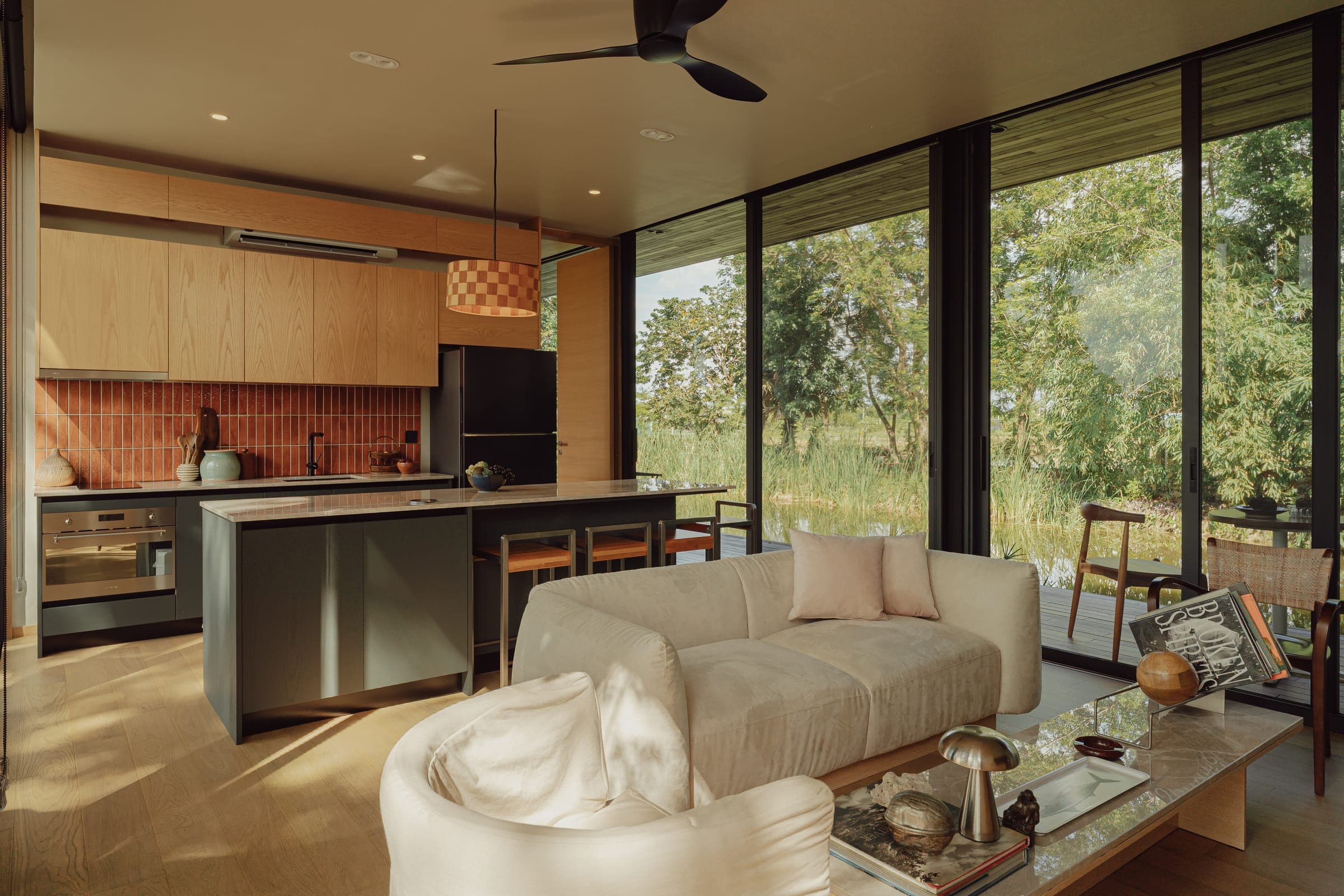
How do you get electricity and water to your land?
Outside Bangkok, Nonthaburi and Samut Prakan, electricity comes from the Provincial Electricity Authority, and the cost depends on how far your plot is from existing lines. Water comes from the Provincial Waterworks Authority where it reaches, or from a well. Ask about both before you finalise the design.
Contact the Provincial Electricity Authority and the Provincial Waterworks Authority early. On remote plots, connection distance can be one of the larger site costs.
Do you need a building permit to build on your own land?
Yes. Under the Building Control Act, building a house generally needs a permit from the local authority, usually the municipality or subdistrict administrative organisation. You submit the title deed, site plan and drawings signed by licensed professionals. Owning the land does not exempt the house from approval.
Our building permit guide explains the documents and steps. The Department of Public Works and Town & Country Planning publishes the national rules.
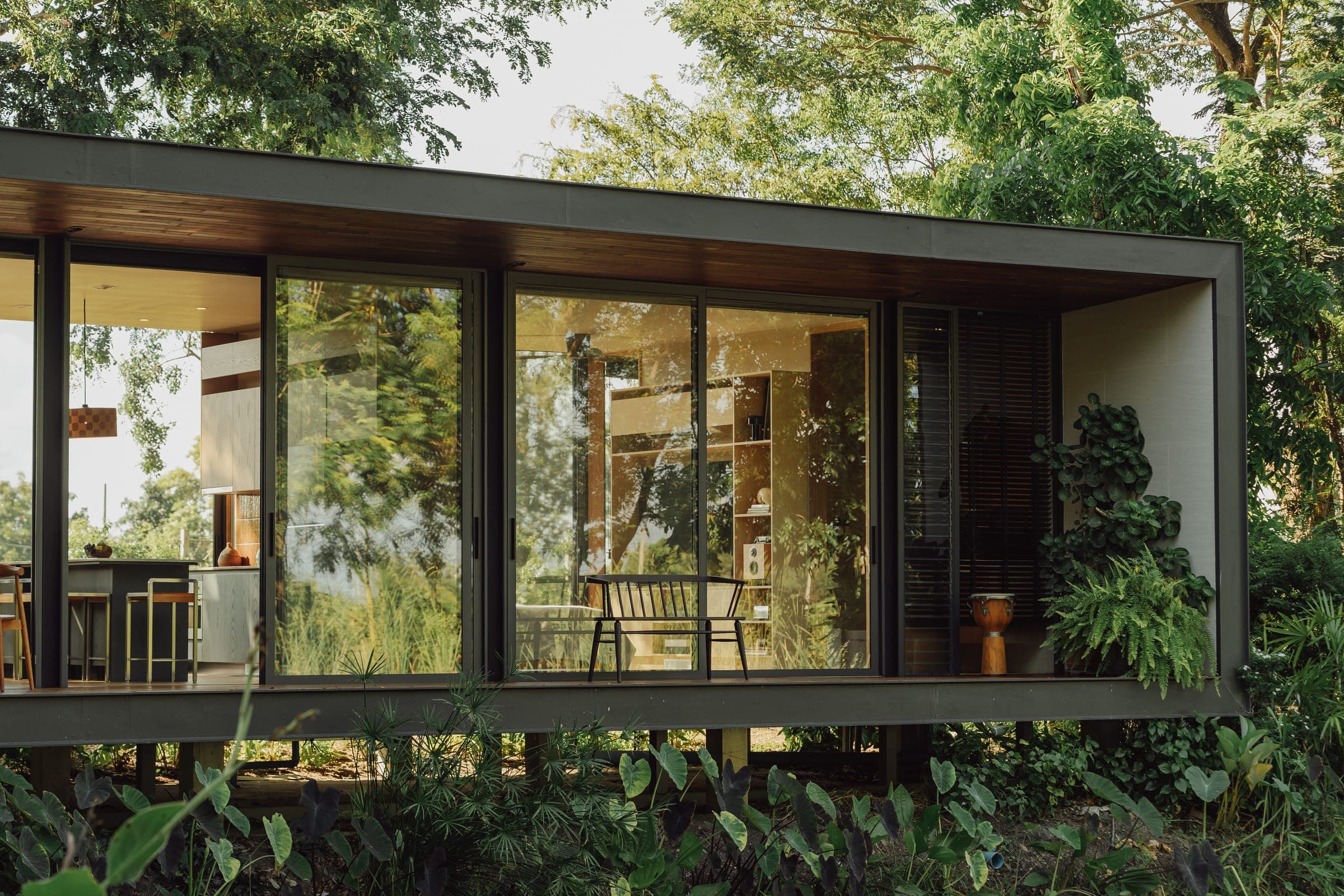
How much does it cost to build a house on your own land?
If you already own the land, your main costs are the house, VAT and site work. INK's fully fitted Sati starts from ฿2,900,000 for Sati M and ฿4,100,000 for Sati L, excluding 7% VAT. Site work such as levelling, access and utility connections depends on your plot and is quoted after a land review.
| Sati M | Sati L | |
|---|---|---|
| Area | 79 m² | 113 m² |
| Dimensions | 12.50 × 6.35 m | 17.50 × 6.35 m |
| Bedrooms / bathrooms | 1 / 1 + guest toilet | 2 / 2 + guest toilet |
| Starting price (excl. VAT) | ฿2,900,000 | ฿4,100,000 |
| Build time from contract | Within 4 months | Within 4 months |
How does INK build a home on your land?
INK reviews your land, agrees the Sati size and site adaptations, then fabricates the structural modules in its own workshop while the foundation is prepared. The same team transports and assembles the home on your land and completes the joinery and finishes. Both the Sati M and the Sati L take no more than four months from contract.
- Share your province, land photos or survey, and plans.
- INK reviews access, slope and utilities and confirms the site work.
- Contract, then permit and foundation work on site.
- Modules fabricated in INK's workshop and assembled on your land.
- Joinery, finishes and fitted furniture completed by the same team; handover.
Both of INK's completed homes, in Khao Kho and Phuket, sit on sloping private land. Tell INK about your land.
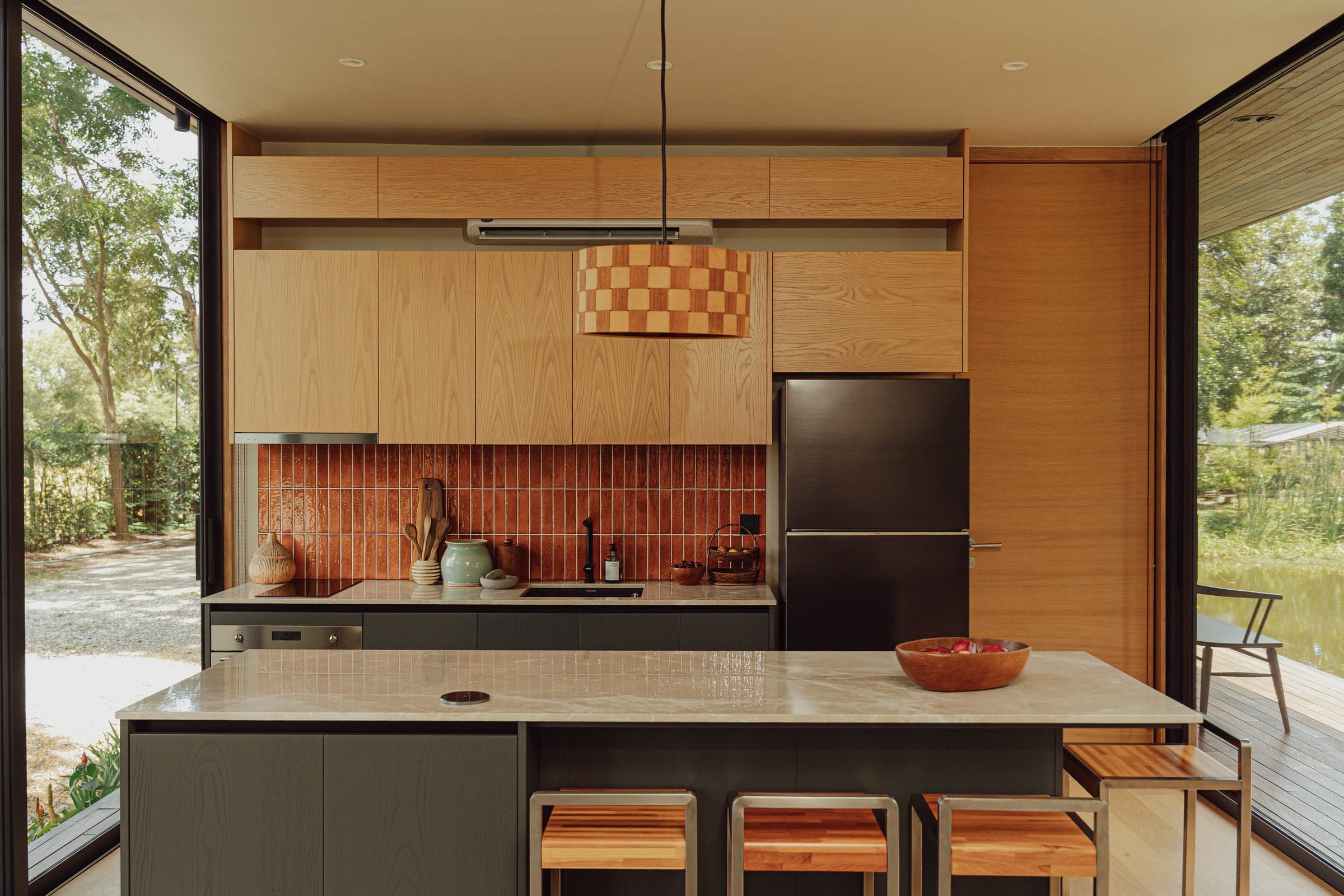
Key takeaways
- Check title type, boundaries, access, drainage and utilities before you design.
- A Chanote gives the clearest rights; reform land (Sor Por Kor 4-01) has strict use rules.
- A house on your own land still needs a building permit from the local authority.
- If you own the land, your main costs are the house, 7% VAT and site work.
- INK builds a fitted Sati on your land within four months from contract.
Frequently asked questions
Can I build a house on agricultural land in Thailand?
Sometimes. Many rural plots with a Chanote or Nor Sor 3 Gor can take a house, subject to local zoning. Agricultural reform land under Sor Por Kor 4-01 is restricted to farming use, with limited housing for the farmer. Confirm the rules with the local land office before you plan a home.
Can I build on land owned by my parents?
Yes, with the owner's written consent, but agree who owns the house. The permit application needs the landowner's permission. Some families register a lease or superficies for the builder of the house, or transfer the land first. Take advice so the arrangement is clear for inheritance later.
How long does it take to build on my own land?
With INK, both the Sati M and the Sati L take no more than four months from contract. Before the contract, allow time for the land review and the building permit, which varies by local authority. Remote plots may also need time for electricity and water connections.
What if my land is on a slope?
A slope is not a barrier. Both of INK's completed homes sit on sloping land, in Khao Kho and in Phuket. A sloping plot may need retaining work, careful drainage and a raised foundation, which add site cost. Share photos and a survey so INK can assess the ground before quoting.
This guide is general information and does not replace legal, engineering or permit advice; confirm local requirements with your local authority. Facts about INK and Sati come from the Sati catalogue and INK's project pages. Drafted with AI assistance and reviewed against INK's published information. Published by INK Homes.